creativelistings.org
The most advanced and established web directory for crafters
★ Get your own unique FAQ + Selling Points on your profile page
★ be seen by 1000s of daily visitors and win new business
creativelistings.org Miniblog
Stop Feeling Guilty About Your Half-Made Masterpieces
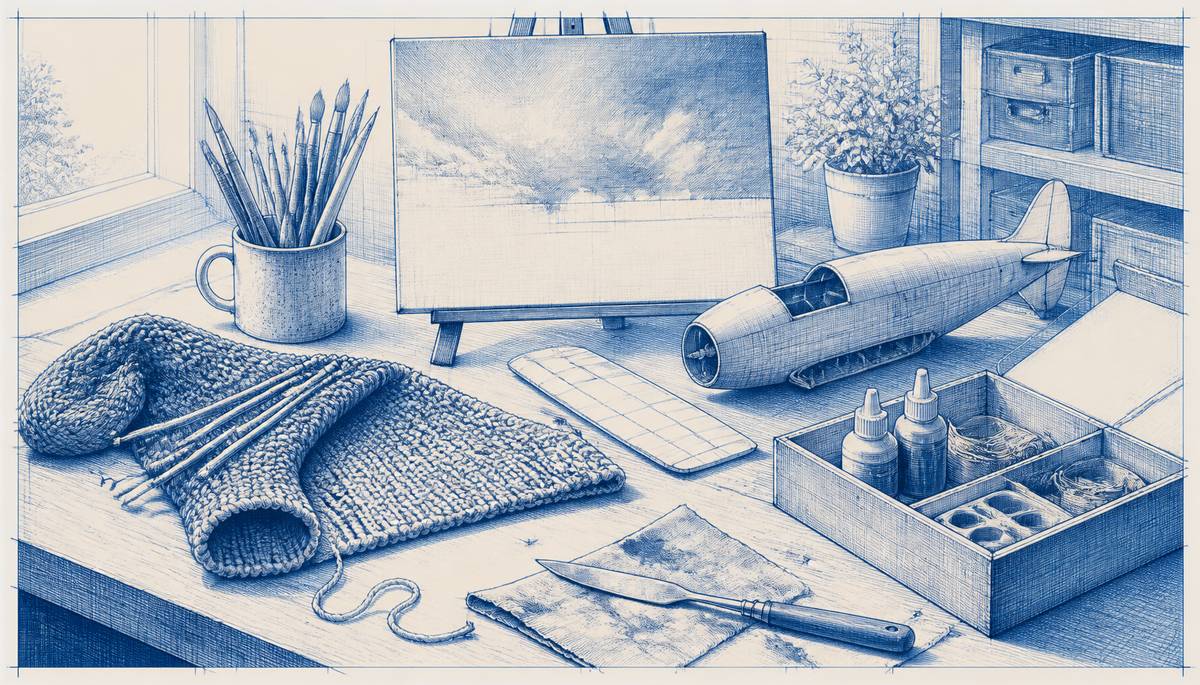 A half-knitted scarf, a painting with only the background done, a model aeroplane lacking a wing, a candle-making kit that somehow never produced a single candle: these are not exhibits in a museum of personal failure. They are evidence of curiosity.
Beginnings are intoxicating. At the start, a project is rich with promise. You choose colours, test materials, learn the first techniques and see visible progress almost at once. Then comes the long middle and the fussy end: another twenty rows, more sanding, the tiny details that looked charming on the box and rather less so on your kitchen table.
That loss of momentum is normal. In many hobbies, starting is simply more stimulating than finishing.
An unfinished project can still earn its keep. It may teach you that you love glazing pottery but dislike shaping clay, or that embroidery suits you better than painting. That is useful knowledge, not wasted effort. Modern craft culture makes this easier than ever, too. Tutorials, cheap starter kits and easy-to-buy supplies lower the cost of trying something new.
Yes, finishing brings a special satisfaction, and revisiting an old project can be surprisingly pleasing once perfection no longer hovers over it. But a hobby is not an annual performance review. Sometimes the point is to explore, learn, and move on.
That half-made masterpiece may never be practical. It may still have done exactly what it was meant to do.
Posted on 26 September 2026
One Well-Planned Corner Can Outperform An Entire Craft Room
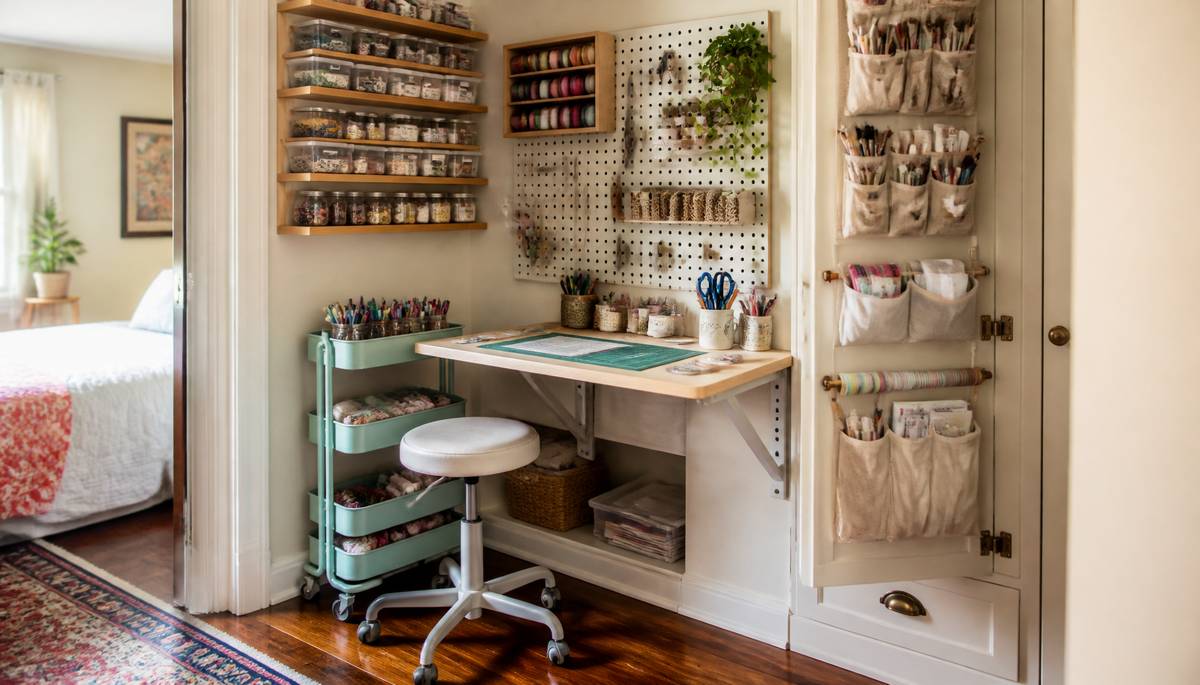 The fantasy of a full craft room is lovely, right up until you look around your home and realise every room is already employed. But creativity does not require a spare wing of the house. It can live quite happily in a sharp little corner of a bedroom, dining area, hallway or home office, provided the setup is doing a bit of work.
The trick is to think upwards. Shelves, pegboards and hanging organisers get scissors, brushes, ribbon and other regular tools off the table and into sight. Clear tubs help too, especially for the fiddly bits. Buttons, beads, threads, clips: all the tiny creatures that breed in drawers and somehow convince you to buy duplicates.
Mobility matters as well. A wheeled trolley, handled box or divided organiser lets you move supplies to the kitchen table when inspiration strikes, then clear it all away before dinner feels like a hostage situation. It also helps to group materials by activity, so sewing is not wrestling with paintbrushes for custody of the same basket.
Furniture should earn its keep. Folding desks, cabinets with pull-out surfaces and even the backs of cupboard doors can all become useful workspace or storage. Just do not organise yourself out of a place to actually make things. The goal is access, not an obstacle course.
A craft room is sometimes just one clever corner with excellent manners.
Posted on 21 September 2026
How Technology Quietly Supercharged Handmade Gifts
 Handmade gifts have always had one enormous advantage over shop-bought ones: they prove someone sat down, used actual time from their finite life, and made a thing for you. That matters. A lot more, usually, than fancy materials or glossy packaging.
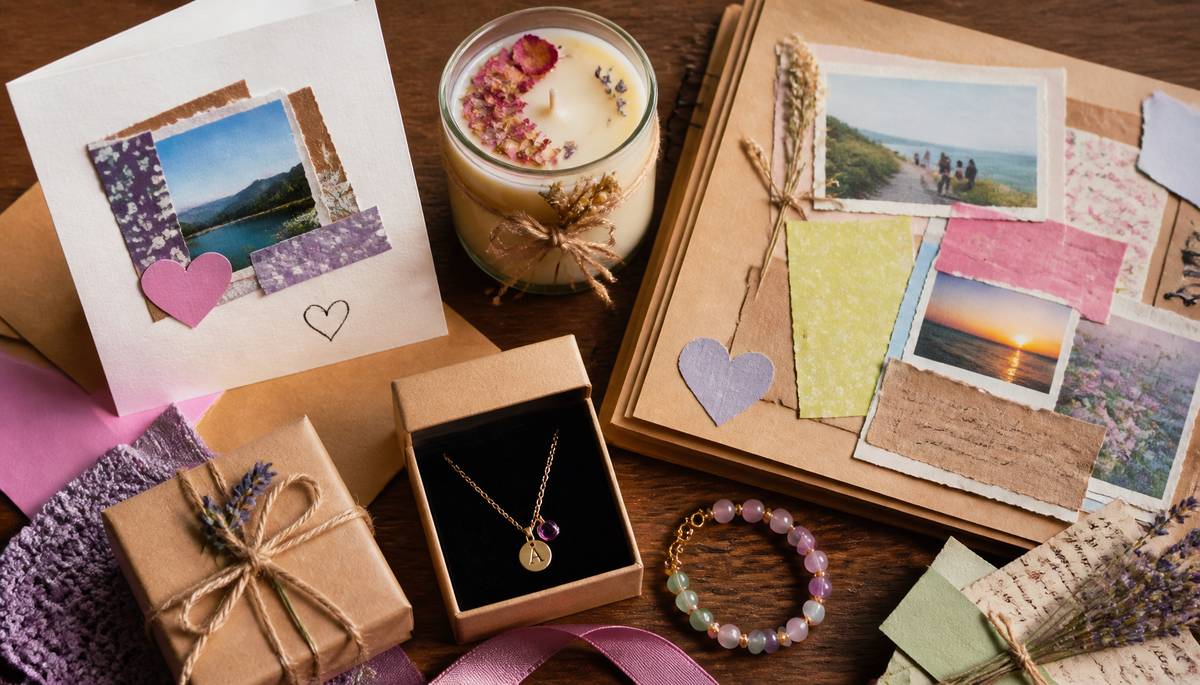
A handmade card is the obvious example. A bit of card, a photo, a scribbled message, maybe some decorative paper, and suddenly it becomes something people keep in drawers for years instead of binning three days after the birthday cake is gone. The same principle applies to candles, where scent, colour, container and label can be tailored to the person rather than whatever a chain shop decided was “seasonal”.
Jewellery works brilliantly too. Initials, birthstones and favourite colours can turn a small object into something genuinely personal. Scrapbooks go even further, stitching together photos, tickets, letters and little scraps of shared history. They take effort, which is precisely the point.
And here’s the mildly surprising part: technology has made handmade gifts better, not worse. Digital photos can be turned into physical keepsakes, and simple design tools help people plan patterns, layouts and templates before they start. It’s craftsmanship with a helpful assistant, not a replacement.
Best of all, handmade presents do not require gallery-level talent. Their slight wonkiness is often the charm. Nobody opens a homemade birthday card and mutters, “Shame about the kerning.”
Posted on 16 September 2026
The Real Reason Old Crafts Survive: Reinvention
 Old crafts do not survive by sitting still. They survive by learning new tricks.
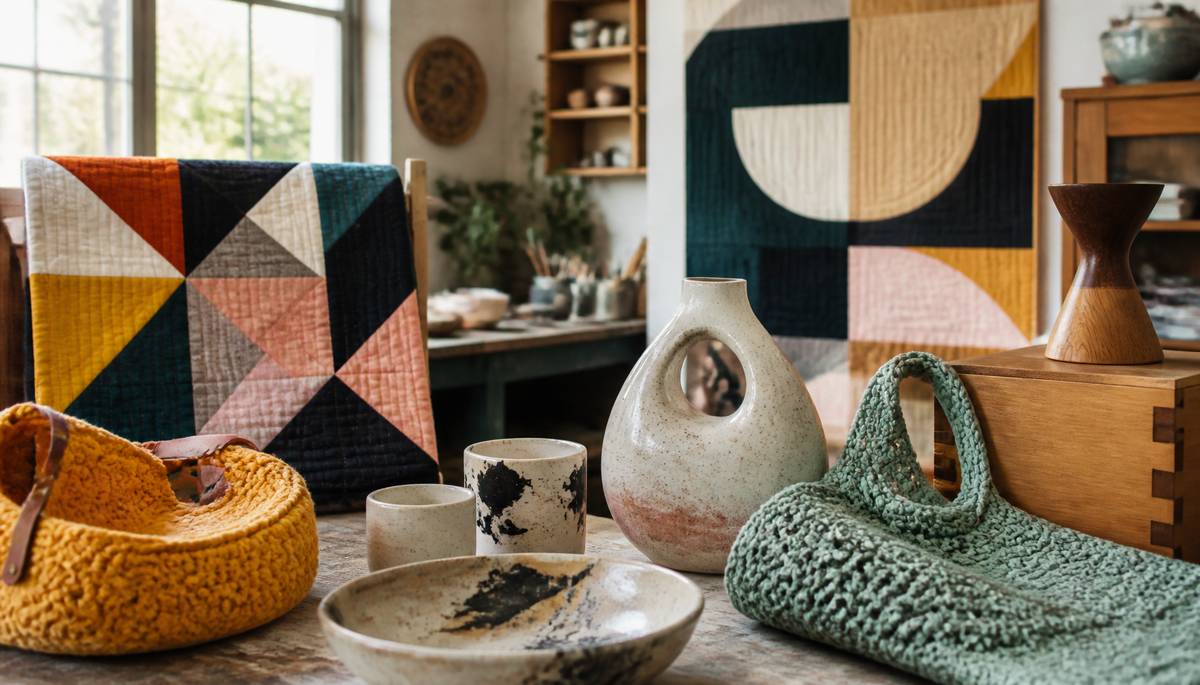
That is why quilting now shows up in sharp geometry, spare layouts and surprising colour pairings instead of only florals and heritage prints. The stitching methods can stay much the same, yet the finished piece feels made for a modern flat, not a cedar chest. Crochet has made a similar escape. It is no longer limited to the familiar blanket; it now turns up in clothing, accessories and homeware with far more attitude.
Woodworking tells the same story. Carving, joinery and hand-finishing still matter, but they can serve cleaner silhouettes and modern proportions. Good craftsmanship does not demand that every table look ready for a 19th-century farmhouse.
Pottery may show the shift most clearly. Makers still throw on the wheel and build by hand, yet they pair those skills with experimental glazes, oddball forms and contemporary decoration. Some pieces cheerfully sit between mug and sculpture.
This matters because a craft lasts only if people can imagine doing something fresh with it. Younger makers are far more likely to learn an old skill if they are invited to experiment rather than copy. Reinvention does not erase history. It proves the old knowledge is sturdy enough to carry new ideas.
Posted on 9 September 2026
The 100-Hour Secret Behind Hokusai's Tiny Masterpieces On The Wrist
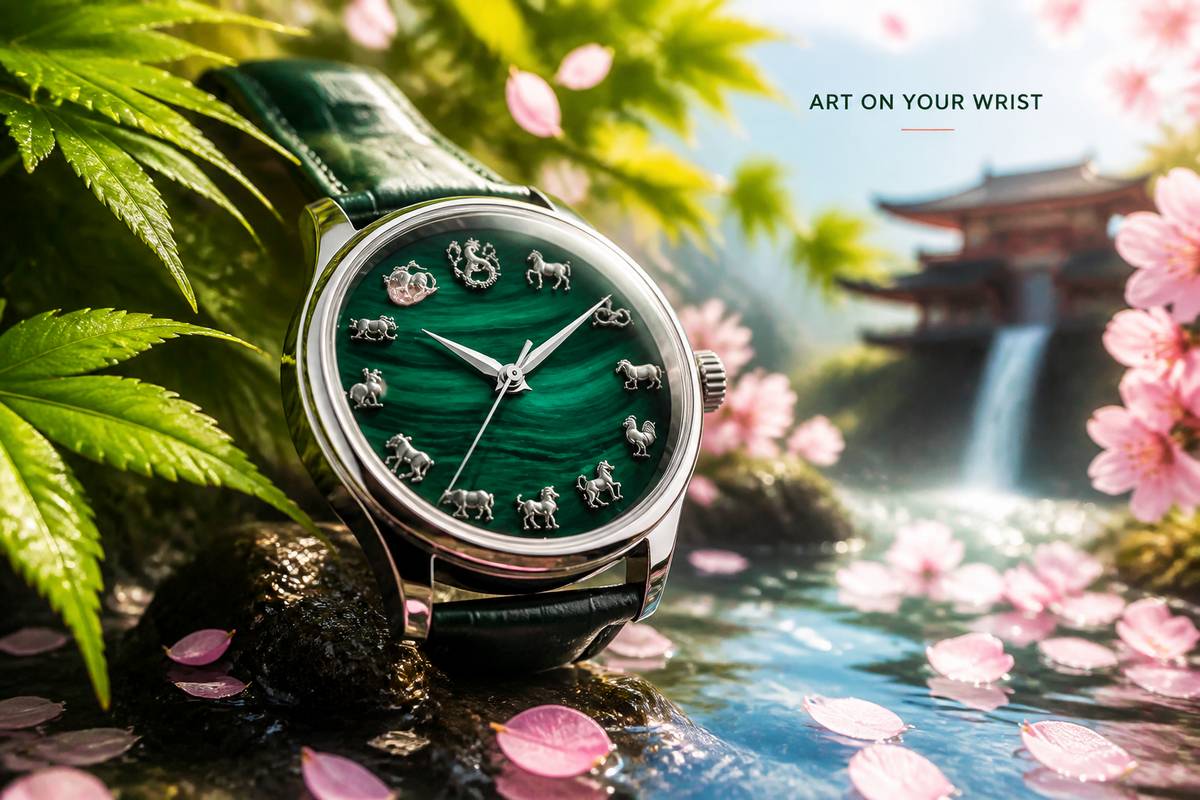 Japanese watch design has gone gloriously strange in the best possible way: cherry petals, waterfalls, copper greens and lacquered moonlight, all squeezed onto a wrist.
Grand Seiko is leaning hard into fleeting seasonal scenes. Its SBGH376 “Sakura-Wakaba” catches that brief spring overlap when fresh green leaves appear as the last blossom drifts down, pairing an 18-carat yellow gold 62GS case with the Hi-Beat Calibre 9S85, ticking at 36,000 vibrations per hour. The SBGX363G and SBGX365G “Hana-Ikada” models turn to petals floating on water, gathered into delicate “flower rafts”.
Then there’s Jaeger-LeCoultre, which has gone full miniature miracle. The 2026 Reverso Tribute Enamel Hokusai Waterfalls Series takes four scenes from Hokusai’s Waterfalls set and recreates each one on the back of the case in enamel. The front adds hand-guilloché beneath translucent enamel, and each watch demands nearly 100 hours from the Métiers Rares craftspeople. Only 10 examples of each version exist.
Kurono Tokyo chose rokusho, the traditional copper-oxide green, with natural malachite for its anniversary Special Projects Malachite. The dial curves gently, the markers follow the 12 eto zodiac signs, and only two in 10 malachite dials pass Hajime Asaoka’s standards.
Minase, marking 20 years, worked with Towa Takaya on dials that shift with light. Ressence, meanwhile, brought in lacquer master Terumasa Ikeda, who bent soaked mother-of-pearl by hand for the urushi-and-raden Type 9 IKE, limited to eight.
Posted on 4 September 2026
Why Do Old Tickets And Broken Objects Look More Powerful Inside Art Than In Real Life?
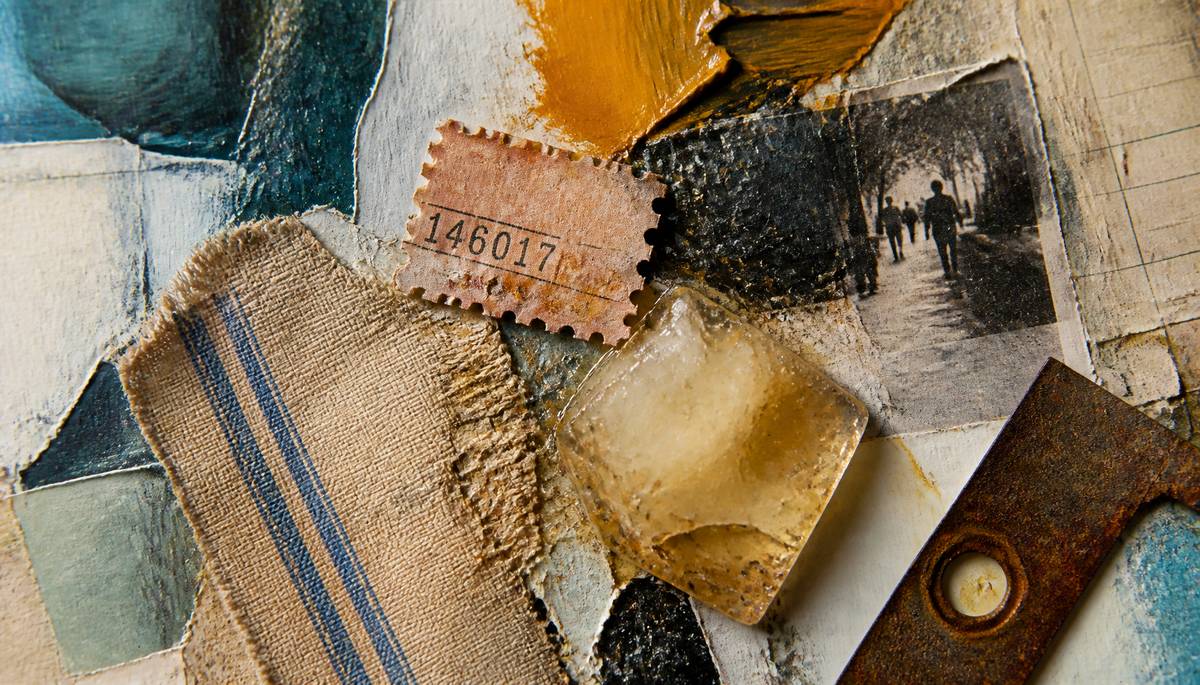 A torn ticket on the pavement is rubbish. Stick it in a painting beside a smear of oil, a faded photograph, a strip of fabric and a bit of resin, and suddenly it starts humming with meaning. Strange, isn’t it? Same object. Different context. Human brains are bizarre little story machines.
That’s one reason mixed media art hits so hard. Artists aren’t limited to paint any more. They can start with acrylic or oil, then drag in paper, printed words, cloth, wood, metal, old letters, packaging, broken household bits or found components that would normally end up in a bin. Resin can trap these things in layers, preserving them like memory under glass.
Texture does a lot of the heavy lifting. Paint gives one surface; fabric, paper and metal give another. Move your head, let the light shift, step closer, and the work changes. It stops being just an image and becomes an encounter.
Photography pushes it further. Original snapshots, archive images and altered prints can sit next to hand-painted marks. Digital tools let artists change colours, combine images or build patterns before printing them onto paper, fabric or other supports.
So why do old tickets and broken objects seem stronger inside art? Because art rescues them from function. It lets them mean more than what they were for, which, frankly, is more than most of us get in real life.
Posted on 29 August 2026
Slow Crafting Is The Quiet Rebellion Modern Life Didn't See Coming
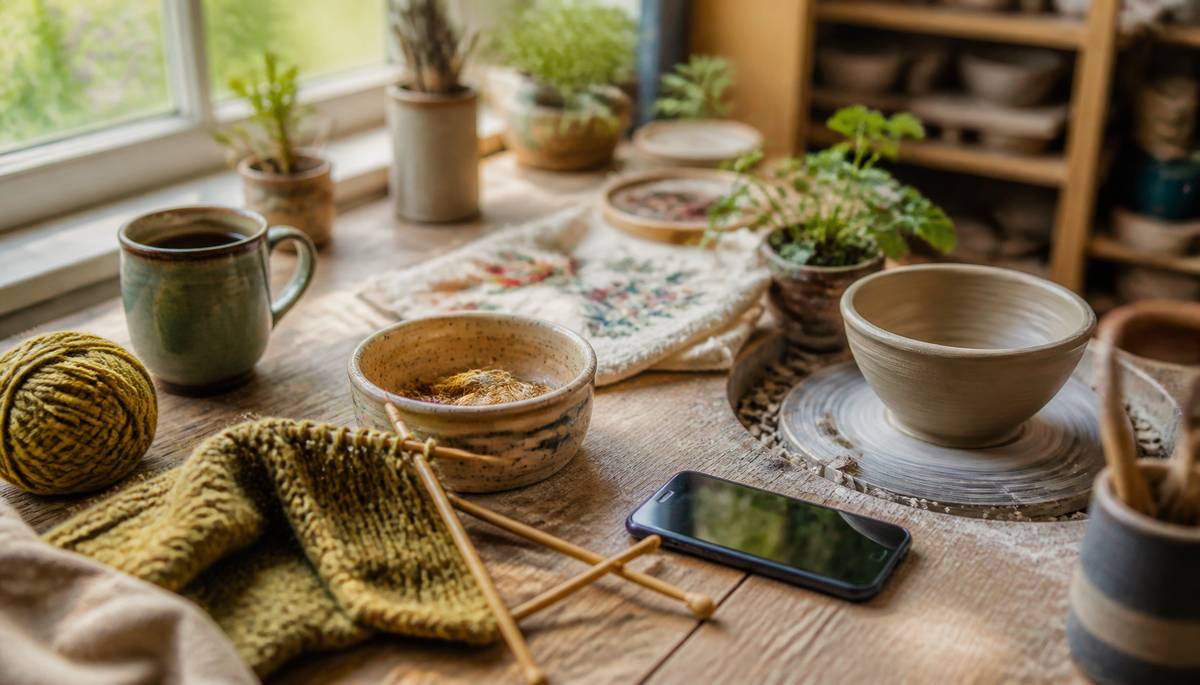 The phone chirps, the inbox twitches, some smug little screen wants your eyeballs again. And then, off to one side, someone is knitting a scarf one row at a time, or coaxing a lump of clay into a bowl that leans slightly left like it’s had a long week. Beautiful.
That’s part of why slow crafting has caught on. It refuses the cult of instant results. Knitting takes time. Embroidery grows stitch by stitch across several evenings. Pottery demands patience from the first touch of clay to the final firing. You cannot bully any of it into being faster.
Oddly enough, that’s the relief. Repetitive movements calm the nervous system: needles clicking, thread passing through fabric, hands shaping clay. The mind gets less noisy because the hands are occupied. Pottery adds a fully physical focus too, asking attention to texture, weight and form.
There’s also the rare pleasure of doing something away from a screen. People may pick up methods from online videos, but the craft itself can happen in silence, free of notifications and the endless scroll.
And then there’s the object. A hat with a crooked edge. A bowl with fingerprints still visible in spirit. Not flawless, just real. Slow crafting offers a quiet answer to a culture obsessed with speed, convenience and next-day everything: make one thing slowly, and let that be enough.
Posted on 23 August 2026
Stop Saving Every Scrap: The Real Secret To Upcycling Without Creating Clutter
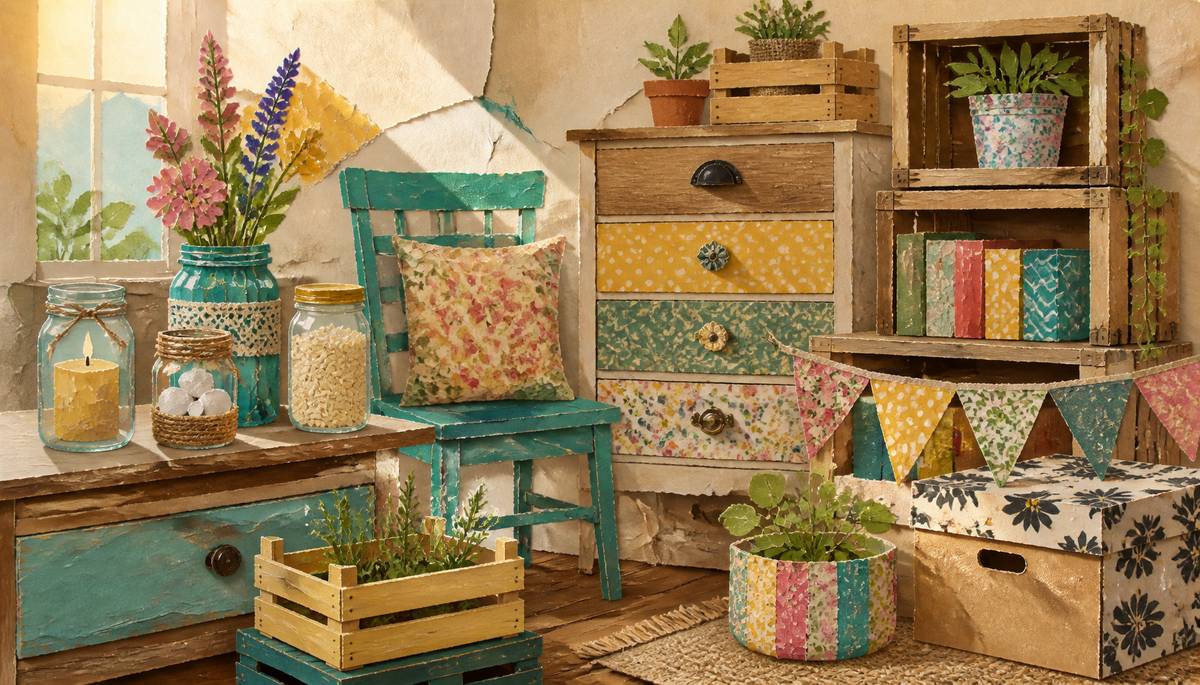 Upcycling has one enemy more stubborn than waste: the bag of “useful bits” breeding quietly in a cupboard. The trick is not to rescue every jam jar and cardboard box in Britain. It is to spot the few with real promise and let the rest go.
Glass jars are the obvious overachievers. Remove the labels, give them a proper scrub and they can hold candles, flowers, cotton pads or rice. Add paint, twine or ribbon and a former pasta sauce jar looks perfectly respectable, which is more than can be said for some expensive ornaments.
Old furniture deserves a second chance if it is solid enough to earn one. A wooden chair can be sanded and painted into something cheerful rather than apologetic. A chest of drawers may need only new handles or patterned fronts. Even a single drawer can return as a wall shelf or storage box, which is satisfyingly resourceful.
Fabric scraps are useful too, but only if they become something. Cushion covers, bunting, patchwork panels and covers for plant pots all make sense. Tiny offcuts are especially handy for small decorative jobs where buying fresh fabric would be faintly ridiculous.
And before you bin sturdy packaging, pause. Cardboard boxes can be covered for smart storage. Wooden crates can become shelves, planters or small tables.
Upcycling is not a vow to keep everything. It is good judgement with a glue gun. Posted on 16 August 2026
The Return of Bright Colors in DIY Craft Projects
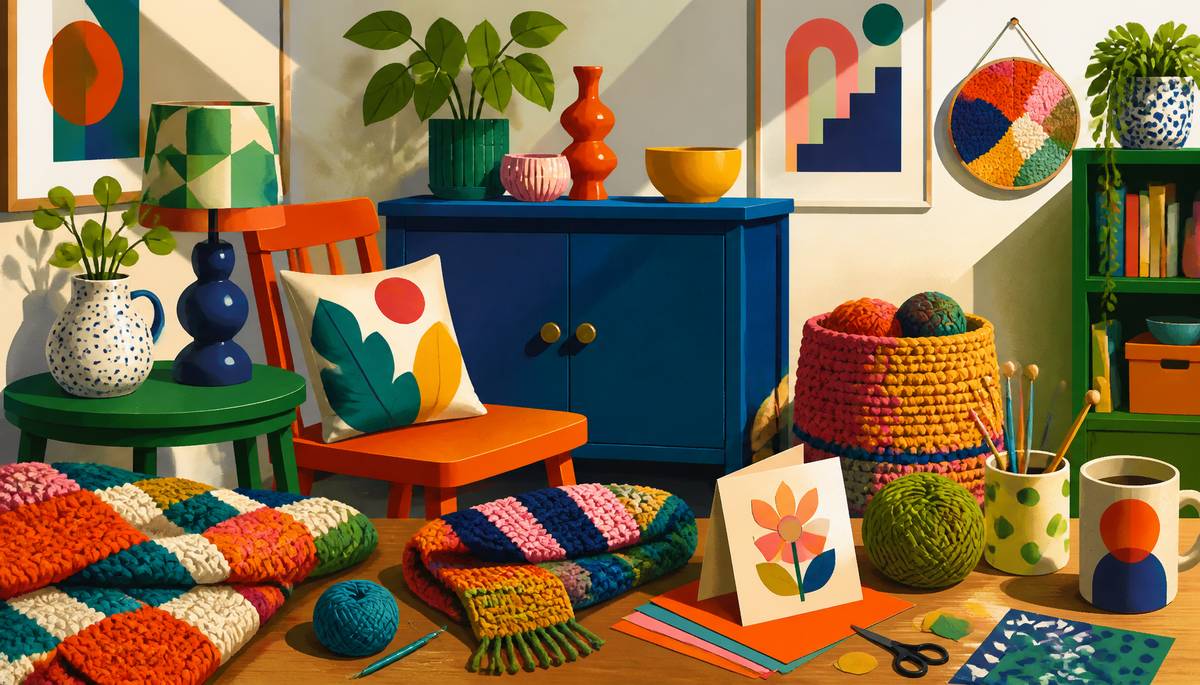 DIY spent a few years acting like it had signed a long-term lease with beige. Cream was everywhere. Grey had people painting furniture like they were trying not to disturb the neighbours. Nice enough, sure, but a bit timid.
Now the brighter end of the spectrum is coming back with some confidence. Painted furniture in rich blue, sharp green or warm orange can turn a forgettable chair or side table into the piece people actually notice. If repainting a whole cabinet feels bold, smaller projects do the job too: colourful ceramics, lampshades and wall pieces let you test stronger shades without committing your entire sitting room to a mood swing.
Yarn crafts suit this shift brilliantly. Knitting and crochet can go from sensible to lively fast, just by throwing in stripes, contrasting blocks or colour combinations that look slightly cheeky on paper and great in real life. A blanket with punchy colours has presence. A three-colour scarf is far less likely to vanish into a drawer and never be seen again.
Paper crafts have even less risk attached. Scrapbooks, greetings cards and decorative paper projects are perfect for trying louder shades, because if two colours clash horribly, you’ve lost a sheet of card, not a wall.
Muted neutrals still have their place. They’re calm, useful and easy to live with. But right now, DIY looks less scared of being seen, and that’s probably better for handmade work anyway. Posted on 12 August 2026
Handmade Imperfection Is Beating Mass-Produced Prints
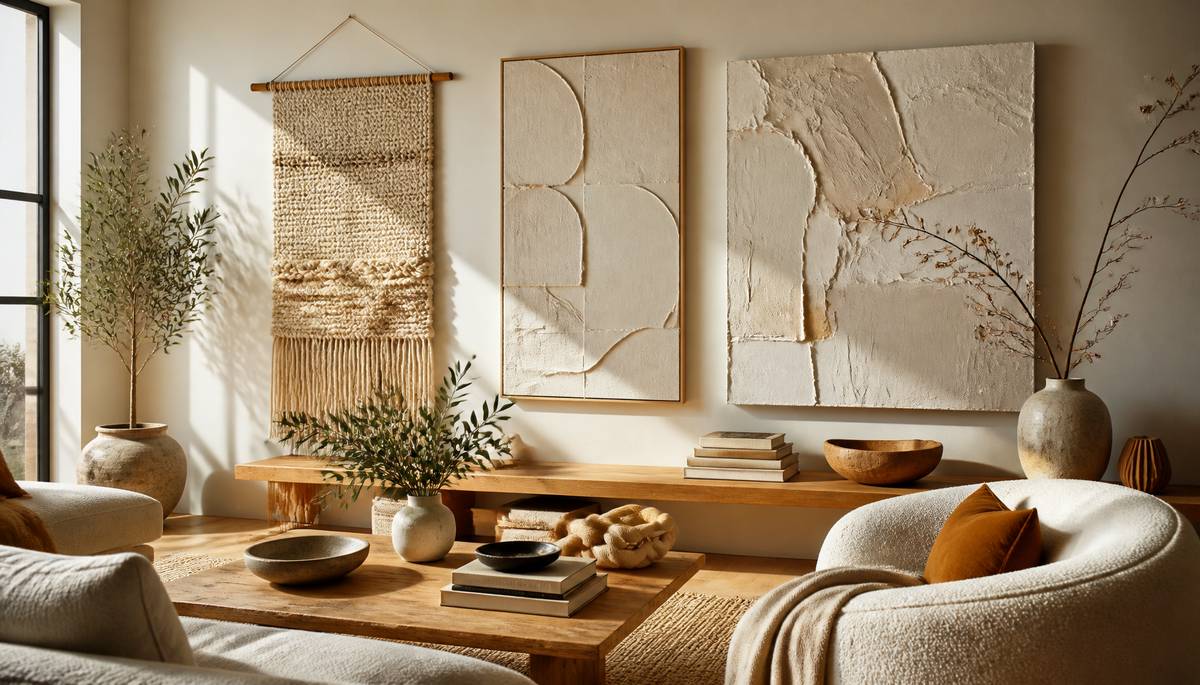 Flat wall art is starting to feel a bit like a hotel biscuit: perfectly presentable, oddly forgettable. What people want at home now is something with a pulse. That is where handmade, textured work is quietly winning.
Interior design has shifted from relying on colour alone to using texture for interest and atmosphere. A woven piece, a knotted hanging, relief art in plaster, or a canvas built up in layers does more than sit there looking polite. It catches the light, throws small shadows, and changes character across the day. In a minimalist room, that matters. You get depth and movement without adding clutter.
Natural materials are a large part of the appeal. Linen, cotton, wood, plaster and woven fibres soften a space and make it feel more settled. They also suit the current appetite for calm, organic interiors, where comfort is every bit as important as appearance.
Plaster and relief pieces, often kept in neutral shades, have become especially popular because they lean on form rather than loud colour. Layered canvas works achieve something similar, using thick paint or mixed materials to create gentle motion and dimension.
Then there is the human bit. Handmade work carries slight irregularities, and that is precisely the point. Those small differences give a room personality in a way mass-produced prints rarely can.
Posted on 3 August 2026
The Most Overlooked Rule Of Nature Crafting Is Also The Most Important
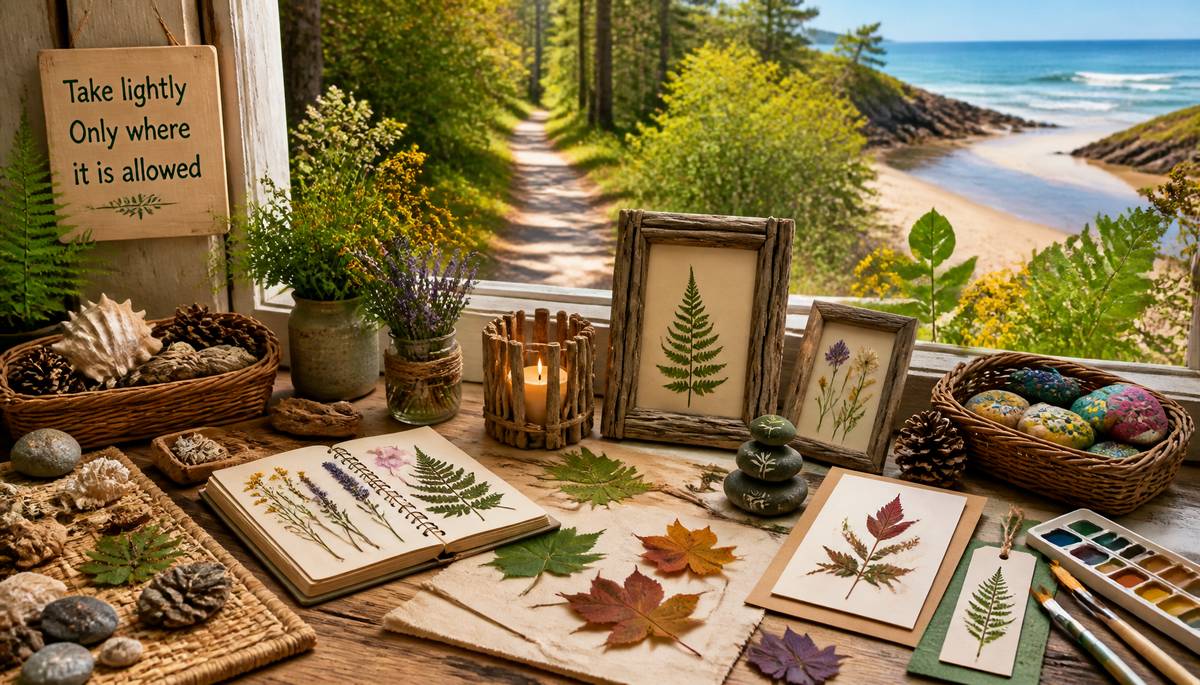 Nature crafting often begins with beauty: a fern with perfect ribs, a shell polished by the tide, a pinecone fit for a winter table. But the rule people miss is the one that matters most: take lightly, and only where it is allowed.
That single habit changes everything. It protects habitats, leaves wild places intact for others, and makes the craft itself feel more honest. Fallen leaves, dropped twigs, washed-up driftwood and smooth stones can become lovely materials without disturbing living plants or protected areas. The best projects start with respect.
The rewards are plentiful. Pressed flowers lend soft colour to cards, bookmarks, framed pieces and handmade paper goods. Leaves, grasses and ferns create beautiful prints, preserving the shape of a season long after it has slipped away. Driftwood brings a weathered charm to frames, candle holders and simple home decorations. Pebbles, once painted, can brighten a garden or become a thoughtful small gift.
There is another benefit, quieter but just as valuable. Collecting materials slows you down. A walk in the woods or along the beach becomes a search for pattern, texture and possibility. You begin to notice more: the turn of the season, the curve of a stem, the patient work of wind and water.
That, really, is the heart of it. Nature crafting is not only about making something beautiful. It is about noticing beauty first.
Posted on 29 July 2026
The More Powerful AI Gets, The More We Crave Human Fingerprints
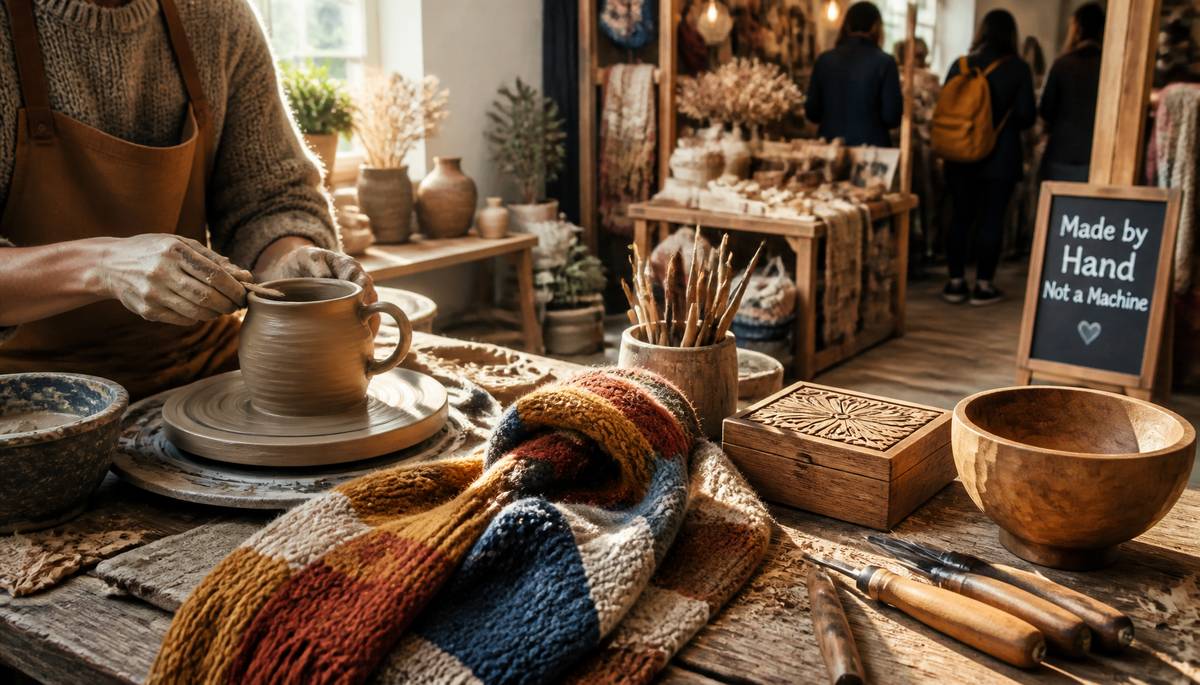 The machine can spit out a picture, a pattern, a clever bit of text before your tea goes cold. Fine. But a machine can’t give you the slight wobble in a clay mug, the uneven stitch in a wool scarf, or the faint tool marks in a piece of carved wood. That’s the good stuff. That’s the fingerprint.
People are getting tired of living through glass. Work on a screen, shop on a screen, chat on a screen, stare at a screen until your eyeballs feel oven-baked. Then suddenly a lump of clay, a needle, a paintbrush or a block of timber starts to look less like a hobby and more like a rescue plan.
That helps explain why craft fairs are busier, independent makers are getting more attention, and small online artisan shops keep finding customers. Buyers want objects with a backstory, not another anonymous item coughed up by a production line. A handmade gift lands differently because it carries time, care and a bit of the maker’s temperament.
And that’s the real point. Making things by hand isn’t just about the final object. It’s about pace, concentration and the quiet satisfaction of turning raw material into something solid and personal. The more life becomes automated, the more people seem to want proof that a human being was here.
Posted on 24 July 2026
Why Did A Garden Hose Turn Into This Summer's Most Addictive Art Trick?
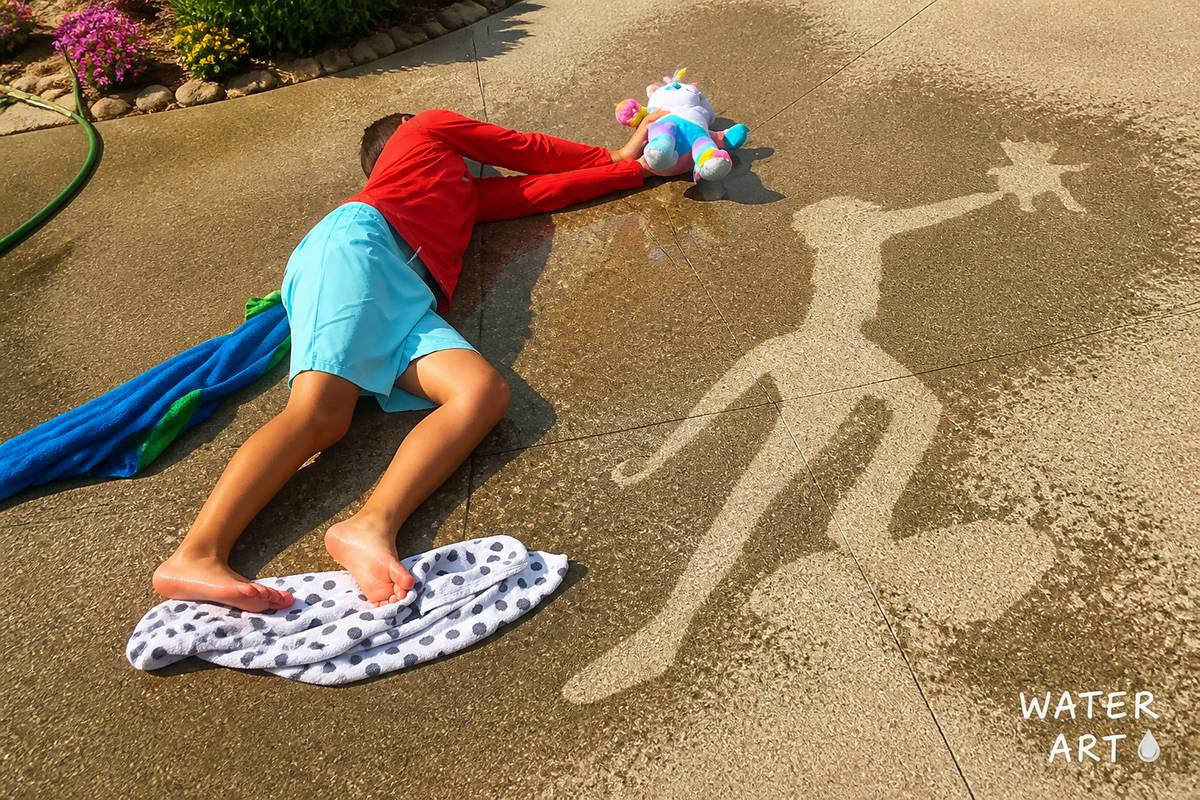 A garden hose is usually a humble bit of summer plumbing, intended for plants, paddling pools, and the occasional accidental soaking of someone holding a phone. But in one Iowa driveway, it has become a remarkably effective art tool.
Megan Baird and her sons, Carter and Parker, have spent the past two summers making what they call water silhouettes: one child strikes a pose on the driveway while another outlines the shape with a spray of water. The result is fleeting, slightly theatrical, and ideal for hot weather. It also gets everyone outside, which Baird says is very much the point. If a hose can compete with screens, it deserves a small civic medal.
Their designs range from simple action poses to recognisable figures such as the Jumpman logo, Mary Poppins with her umbrella, and Rafiki presenting Simba. Baird has posted videos online, where several have attracted millions of views, suggesting the internet still has room for wholesome inventions involving pavement and mild dampness.
She says she remembers doing the same thing as a child and assumed it was a fairly normal 1990s and 2000s pastime. Perhaps it was. Perhaps we all simply forgot.
The boys tend to do it in the morning, before the driveway gets too hot underfoot and before the pictures vanish back into dry concrete, which is part of the charm: art, weather, and play, all disappearing on schedule.
Posted on 14 July 2026
How Did A Four-Room Summer Cottage Become An Arts And Crafts Masterpiece?
 What began in 1899 as a modest four-room summer hideaway for the artist Olivia Mudie-Cooke grew, bit by bit, into Long Copse: one of the finest surviving Arts and Crafts houses in Britain. The trick was in the way it was enlarged. Rather than plonking on obvious extensions, architect Alfred Powell shaped each addition so the house seemed to have ripened naturally over generations.
That sense of slow, thoughtful growth still gives the Grade II-listed home its particular magic. Set in Ewhurst, on the slopes of Pitch Hill in the Surrey Hills National Landscape, the six-bedroom property now spans about 3,300 square feet and is for sale at £3.5 million, or roughly $4.8 million. Remarkably, this is only the third time it has come to market since it was built.
Powell is better known for reviving hand-painted ceramics at Wedgwood, which makes Long Copse especially notable. It also bears the mark of Ernest Gimson, who designed much of the original oak joinery, fireplaces, doors and fitted furniture still in place. Inside are leaded windows, stone walls, oak stairs, a drawing room with a hefty hearth, a study with a bread oven and decorative work by the Italian artist Cavaliere Formilli. Outside sit a barn turned library and music room, a thatched guest cottage, woodland paths and around 70 oak trees, with wide views across the Sussex Weald.
Posted on 8 July 2026
In Jingdezhen, Clay Meets a Thousand Skilled Hands
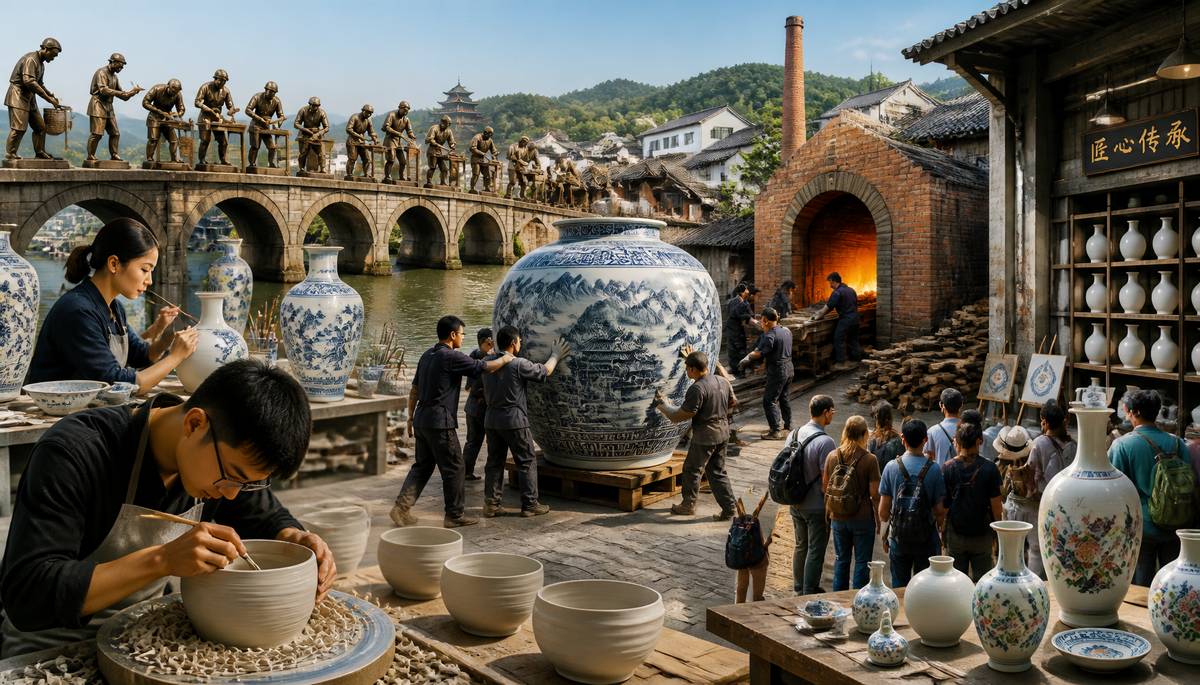 Jingdezhen works like a vast ceramic orchestra where one pair of hands trims, another paints, another ushers a fragile giant into flame, and somehow the thing emerges whole. In China’s porcelain capital, that old discipline of specialization still governs the craft: apprentices may spend years mastering a single step, and the city’s full production chain now supports more than 100,000 workers.
The place is enormous by artistic standards—over 60,000 ceramic studios—and this year it is hosting the 2026 Congress of the International Academy of Ceramics, drawing global artists and scholars into a conversation about tradition and reinvention.
Jingdezhen has been shipping porcelain abroad since the Song Dynasty, from 960 to 1279, reaching Central Asia, West Asia, Europe and Africa. Its pull remains strong; at peak periods, more than 5,000 overseas ceramic enthusiasts gather there.
What draws many of them is not just history, but access to highly refined makers. French artist Karima Duchamp returned after a three-month residency last year, having discovered that local kiln expertise could carry work she could not fire alone. Croatian artist Sandra Ban, back again half a year after her own three-month stay, found the city especially freeing for awkward, irregular and large-scale pieces. Australian artist Fleur Schell said its scale and completeness have lured many Australian peers.
Along Zhushan Bridge, 72 bronze statues depict the traditional stages of porcelain-making. At 87, master artisan Liu Yuanchang described Jingdezhen’s enduring genius as a coordinated ecosystem of hands turning ideas into objects.
Posted on 3 July 2026
30 Backyard Nature Crafts That Turn Summer Chaos Into Something Lovely
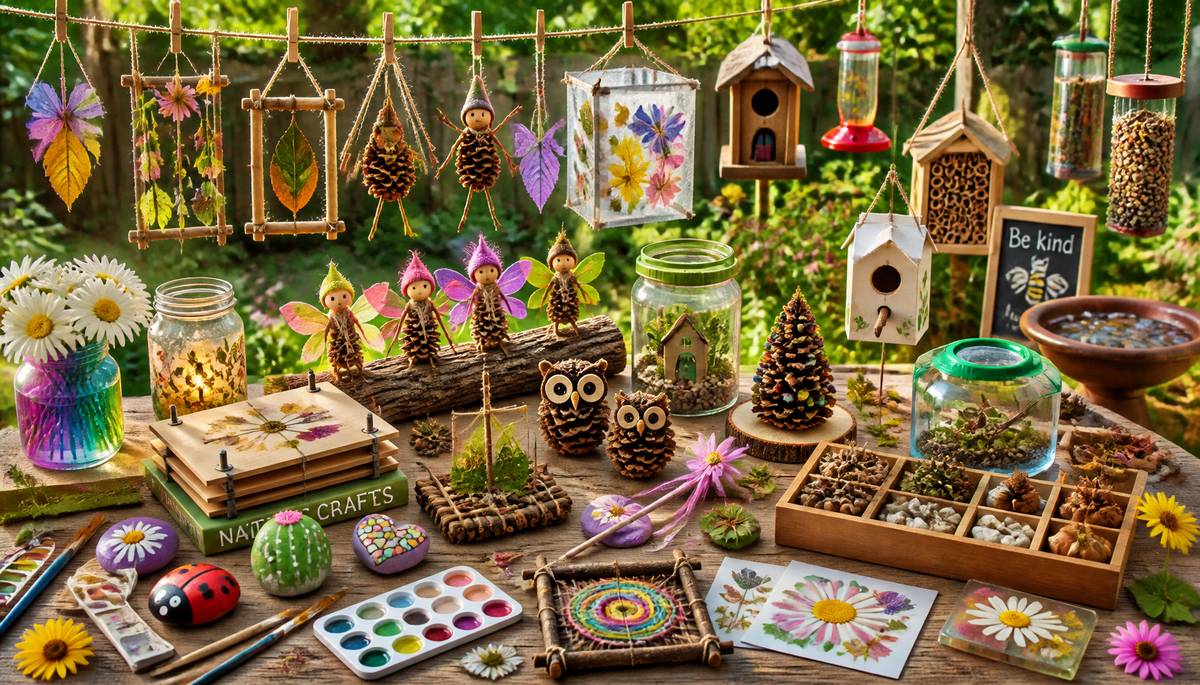 Summer with children can feel like being employed by two tiny, glittery CEOs with no respect for lunch breaks. A practical antidote: 30 backyard nature crafts that turn sticks, petals, rocks, and pinecones into actual entertainment while quietly smuggling in fine-motor practice, sensory play, STEM concepts, and a bit of ecological literacy.
The essential kit is blissfully modest: scissors, paint, twine, mason jars, recycled containers, and paper or cardstock. The rest can be foraged from the garden or nearby paths.
The list spans flowers, leaves, sticks, pinecones, rocks, and wildlife-friendly projects. Flower ideas include flower portraits, pressed-flower resin magnets, a DIY flower press, color-changing flowers using white daisies, water, food coloring, and jars, plus pressed-flower lanterns. Leaf projects cover threading, painted mobiles, painting, sensory bottles, and leaf hedgehogs. Sticks and pinecones become fairies, rafts, dragonflies, fairy wands, garden markers, woven art, stick frames, pinecone trees, and pinecone owls. Rocks are repurposed as mosaic hearts, cactus pet rocks, ladybug tic-tac-toe sets, pendants, and fairy gardens in jars.
Wildlife lovers get a bug observation box, bird feeder, bee bath, milk-carton birdhouse and feeder, butterfly feeder, and bird’s nest helpers.
Age guidance is sensible: ages 2–3 suit rock or leaf painting, sensory bottles, and flower portraits; ages 4–7 can tackle stick fairies, leaf mobiles, and bird feeders; ages 8+ are ready for pressed-flower magnets, bug boxes, and stick rafts.
Posted on 1 July 2026
Craft x Tech Turns Japanese Tradition into a Live Wire
 Japan has launched another elegant little ambush on the future: take endangered craft traditions, invite international designers in, add technology, and see what happens when centuries stop behaving like museum pieces.
Craft x Tech, led by Hideki Yoshimoto of Tangent and the University of Tokyo with curatorial direction from Maria Cristina Didero, pairs six global creatives with Japanese makers. After beginning in Tohoku two years ago, the 2026 edition turns to Tokai, where workshop culture and industry have long grown side by side.
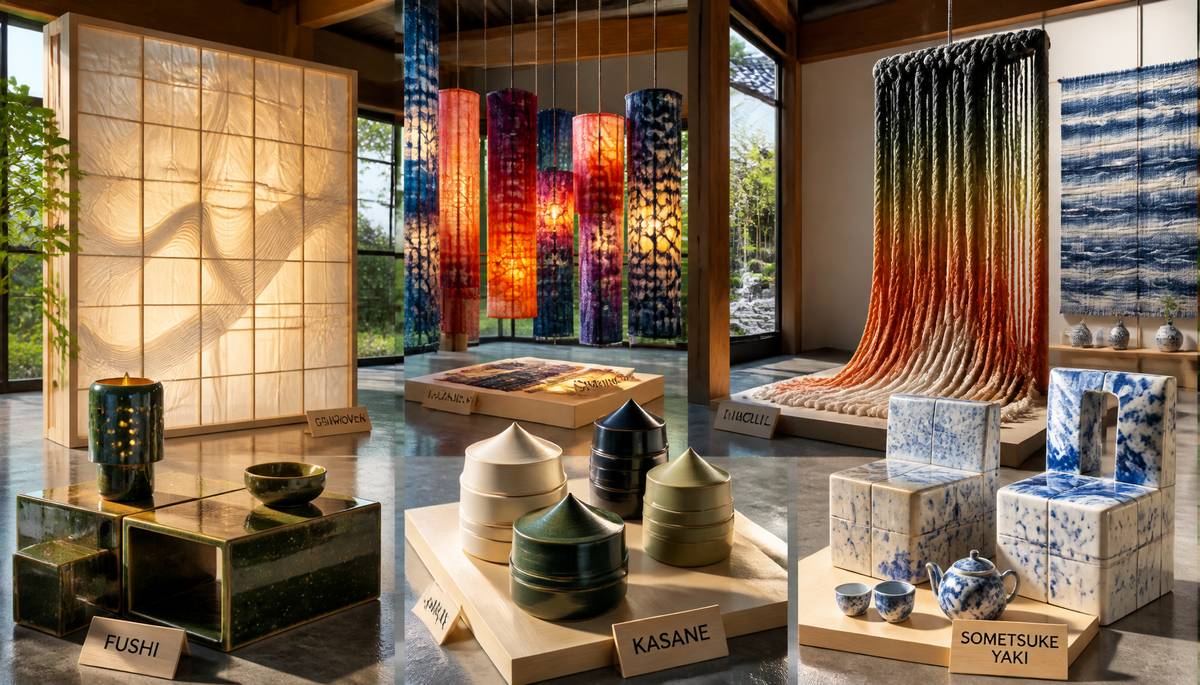
The results are gloriously specific. Lanzavecchia + Wai worked with Mino Washi artisan Takanori Senda in Gifu on Grid Unwoven, a 2m-by-2m shoji-like screen whose paper surface ripples in curves and is lit from behind by LEDs like a private weather system. Bethan Laura Wood and Hiroyuki Murase of the fifth-generation Suzusan family transformed Arimatsu Narumi Shibori in Aichi into Kataginu, a hanging lighting system wrapped in vividly dyed textiles.
David Caon teamed with Yohei Ito of the third-generation Fudogama kiln on Fushi, a modular console and lighting series in Oribe-glazed Mino Yaki, embracing the unpredictability of firing. Philippe Malouin reinterpreted Owari Shippo enamelware as Kasane, stackable boxes inspired by the conical sand forms at Kyoto’s Ginkaku-ji. Eugene Studio and Mayuki Kato of Shingama produced tile-clad chairs and tea vessels in Seto Sometsuke Yaki. Atang Tshikare and Tomoyuki Matsuda of Itogo created Yamollo, a volcanic cascade of Iga Kumihimo silk cords.
The premise is preservation by mutation. Posted on 27 June 2026
Who Gets the Credit When the Machine Sings?
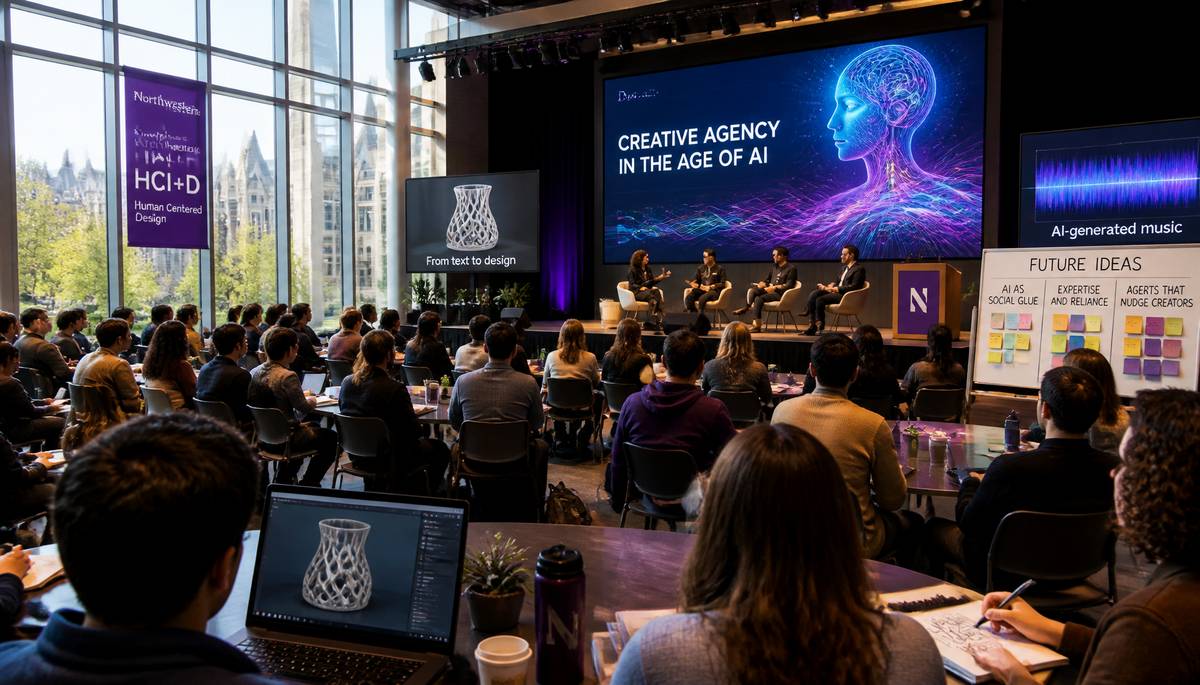 On Mar. 6, Northwestern’s Center for Human-Computer Interaction + Design, a joint effort of Northwestern Engineering and the School of Communication, staged a symposium called Creative Agency in the Age of AI. The gathering asked a plain, modern question: if a machine can improvise, who is really holding the paintbrush?
Faculty, students, and industry partners from the arts examined human-AI collaboration: shifting roles on creative teams, interfaces that preserve human intention, and the knowledge people need to stay in charge of their own process. HCI+D codirector Liz Gerber framed creativity as central to excellence across science, the humanities, and the arts. Duri Long emphasized that AI tools must be designed and folded into workflows carefully if human agency is to survive the marriage.
Long organized the event with Karan Ahuja and Noshir Contractor. It opened with demonstrations. Ahuja and Chenfeng (Jesse) Gao showed a generative AI system that turns text descriptions into fabrication-ready designs, moving users from idea to physical object while sparing them technical drudgery. Ethan Manilow, now at Google DeepMind, presented Lyria and Magenta, which generate high-fidelity music from text or image prompts.
Three panels followed, on automation versus agency, AI in creative teamwork, and cognition in human-AI processes. The day ended with speed-written mini-proposals on future research, including AI as social glue, expertise and reliance, and agents that nudge creators beyond familiar habits.
Posted on 22 June 2026
Aura’s E-Ink Frame Makes the Digital Photo Frame Slightly Less Ridiculous
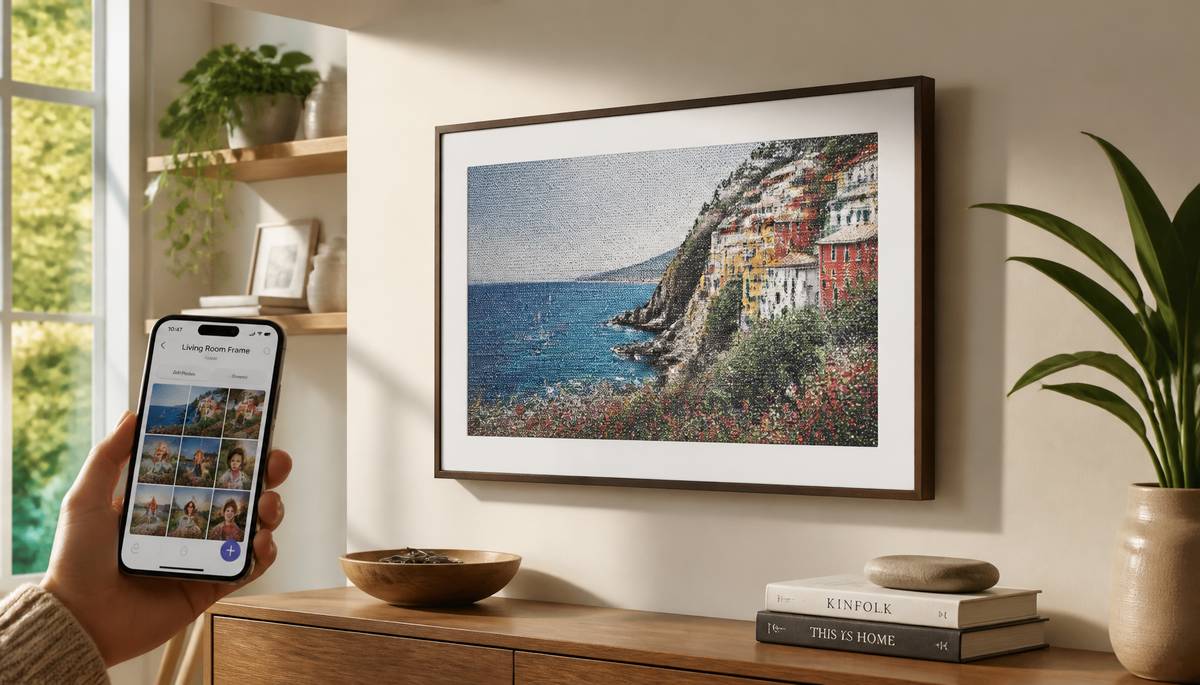 The digital photo frame has long occupied the same emotional territory as novelty socks: well-meant, faintly embarrassing, and usually more conspicuous than the memories it is meant to honor. Aura’s new Ink frame is an attempt to rescue the category by making it resemble an object you might actually choose to hang on a wall.
The 13.3-inch Aura Ink uses color e-ink, so it avoids the glow and cable drama of typical frames. It can hang like ordinary art and needs charging by USB-C about once a month; it sleeps when the room is dark or empty. Images rotate once per day by default, usually overnight. Manual changes take around a minute and briefly look glitchy while the hardware renders them.
That delay is the price of an unusual compromise. Current color e-ink manufacturing supports only six colors: red, blue, green, yellow, white, and black. Aura built a dithering algorithm to turn normal photos into patterns the eye reads as fuller color, with particular attention to portraits. Results are not exact, but often convincing enough to be mistaken for a print.
Photos upload through Aura’s app from phones, web, email, iCloud, or Google Photos, and shared libraries let relatives add images remotely.
Aura also sells a 12-inch LED model, the Aspen, for $229. The Ink costs $499. It is expensive, limited, and oddly elegant. Posted on 20 June 2026
Adobe’s AI Test Arrives
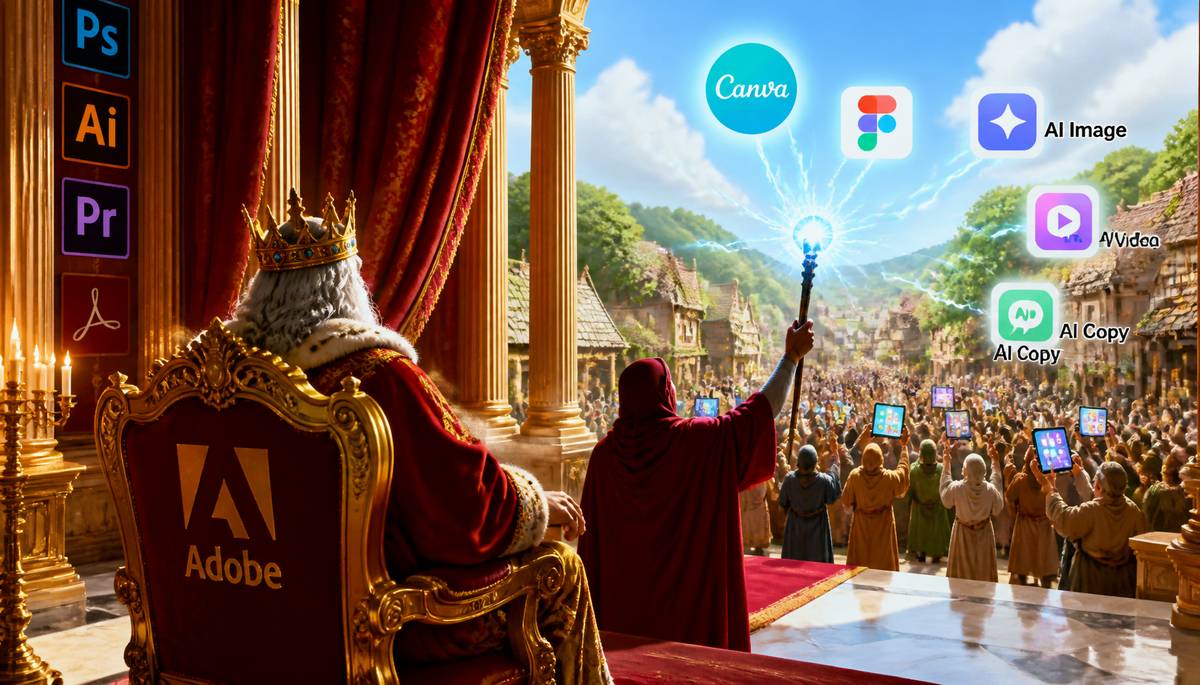 Adobe, listed on NASDAQ as ADBE, has the slightly pinched look of an old monarch being told that the villagers have discovered electricity. For years it ruled digital creativity with Photoshop, Illustrator, Premiere Pro, and Acrobat, the sort of software names spoken with the reverence usually reserved for surgeons and tax accountants.
Now generative AI has arrived like a nephew who learns one card trick and suddenly expects to inherit the house. New tools can make images, video, presentations, and marketing copy from a text prompt, and that has investors wondering whether Adobe’s traditional software may become less essential. Canva and Figma, among others, have hurried AI into their platforms, making design quicker and far less intimidating for amateurs.
Adobe has not stood there clutching its pearls. It launched Firefly, its own AI system, but the market seems unconvinced that these features will earn money as reliably as the company’s long-standing subscription business. Adobe has leaned into freemium AI products to bring in users, a sensible move that may also weaken near-term revenue growth and pricing strength.
That anxiety has punished the stock. Even with solid revenue growth and higher financial guidance, shares have dropped sharply as investors question whether AI will erode Adobe’s moat. The exits of both its CEO and CFO have only sharpened concerns over where the company goes next.
Posted on 17 June 2026
The Art of Making Art Pay
 Culture has a habit of looking effortless from the audience side. A song arrives, a film appears, a crafted object sits there charmingly, as if it wandered in under its own steam. In fact, the global cultural and creative industries run on labour, and a great deal of it: nearly 50 million jobs worldwide, with more 15-to-29-year-olds employed here than in any other sector.
That matters enormously in developing countries, where creative work can offer a route away from poverty, exclusion and unemployment. The snag, as UNESCO sets out in its 27 May 2026 report, Skills and employment in the culture and creative industries: Strategic frameworks and promising initiatives, is that the people making culture are often short of training, support and decent conditions.
The survey covers everything from music, fashion and film to heritage crafts, across all regions, and finds familiar obstacles wearing new hats: patchy policy, too few teachers, qualifications that belong in a museum, and alarming gaps in data. It also points to practical remedies already in use from Colombia to the Republic of Korea, including micro-credentials, intergenerational learning, inventive teaching methods and public-private partnerships.
The sharpest divide is digital, but not only digital. Today’s creative workers need artistic ability plus business sense, marketing, entrepreneurship and knowledge of intellectual property. TVET and higher education have often lagged behind. UNESCO argues that culture, education and labour authorities must work together, because better creative skills also advance poverty reduction, quality education, decent work, gender equality and more inclusive societies.
Posted on 15 June 2026
When AI Puts On Reading Glasses
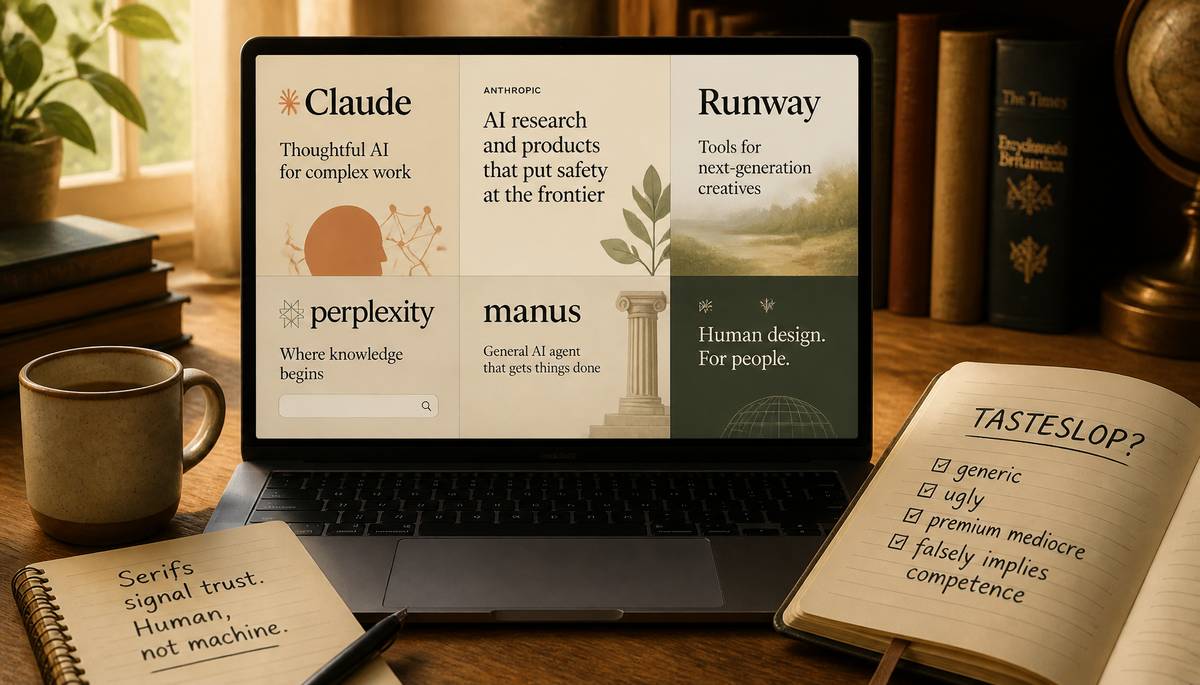 AI’s latest makeover is hilarious: it put on a serif and expects us to think it journals.
As suspicion of generative AI grows, people keep hunting for tells. First it was em dashes, the rule of threes, and that stiff not X but Y construction. Now the giveaway may be typography. Serif fonts are spreading across AI products and branding, part of what Bay Area writer, designer, and type practitioner Keya Vadgama calls a serif renaissance.
Vadgama argues the shift is about making AI feel less chilly and more human. Because serifs come out of calligraphic traditions, they suggest a hand, not a server farm. She noticed Claude defaulting to serifs, while Anthropic, Runway, Perplexity, and Manus have also leaned into similar type choices in product design and branding. Perplexity’s Jesse Dwyer said the company uses human design because the product is for people.
The logic is old-fashioned and effective: serif type signals trust, scholarship, and authority. Times New Roman, commissioned for The Times in the 1930s and used in print culture from newspapers to Encyclopaedia Britannica, still carries that weight. Ali S. Qadeer of OCAD University notes Claude’s brown, page-like background reinforces the print-era feeling of credibility.
Critics call the look tasteslop: generic, ugly, premium mediocre. Even Claude says the polished serif aesthetic can falsely imply competence and obscure what AI actually is.
Posted on 9 June 2026
Here's Why All YouTube Channels Sounds the Same in 2026
 One of the more curious developments on YouTube is how many creators are using AI in the most unimaginative way possible. Not as a research assistant, not as a tool for generating new ideas, but as a script vending machine. The result is a growing number of channels that feel strangely interchangeable, regardless of the subject matter.
The tell-tale signs are everywhere. Videos begin with phrases like "In today's fast-paced world," "It's important to understand," or "Let's dive deep into." Every topic is described as "fascinating," "groundbreaking," "complex," or "ever-evolving." Historical events become "remarkable journeys." Technology is always "revolutionizing industries." Every conclusion reminds us that "the future remains uncertain" while encouraging us to "stay informed."
The problem isn't simply that these phrases are overused. It's that they reveal the absence of an actual voice. AI tends to default toward generic language designed to offend nobody and surprise nobody. When creators rely on basic prompts, they receive basic outputs, complete with the same cautious transitions, repetitive summaries, and inflated claims of significance.
Ironically, the biggest offenders are often the channels that place a real person on camera. Viewers naturally assume that someone speaking directly to them is thinking, interpreting, and contributing something of their own. Instead, what increasingly appears to be happening is that many creators are simply reading AI-generated scripts. The human face creates an expectation of live cognition, but the words often feel pre-packaged, detached from any genuine perspective.
This creates a broader cultural effect. As more creators rely on the same tools and the same prompting habits, channels begin to sound alike. Distinctive voices are replaced by a kind of algorithmic middle ground. Whether the subject is science, history, business, or culture, the cadence, vocabulary, and structure become eerily familiar.
AI can certainly be used creatively. The issue is not the technology itself. The issue is that too many creators seem content with the first, most generic answer the machine provides. The result is a platform increasingly filled with people speaking, but fewer people actually saying anything. Posted on 8 June 2026
Northwestern Examines Whether AI Can Aid Creation Without Stealing the Creator
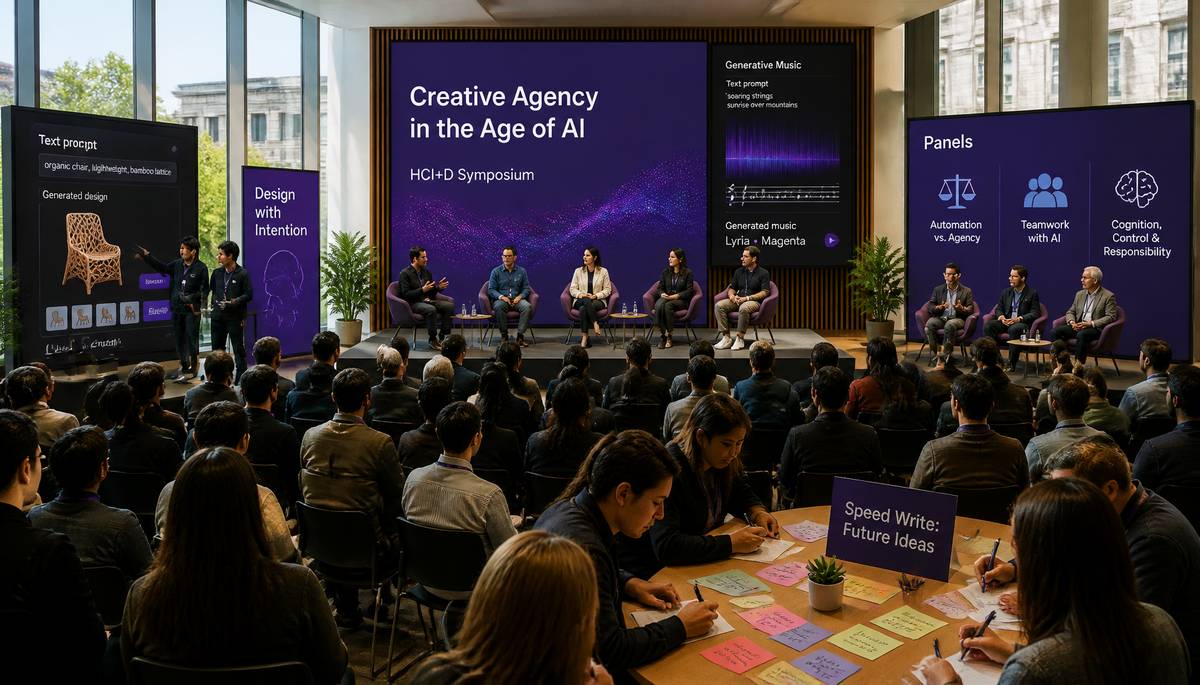 On Mar. 6, Northwestern University’s Center for Human-Computer Interaction + Design, a joint effort of Northwestern Engineering and the School of Communication, gathered researchers, designers, students, artists, and industry partners for a symposium on creative agency in the age of AI.
The central concern was not whether machines can produce things, but whether people remain authors of what they make. Across disciplines, participants examined how generative AI is altering creative roles, how interfaces might better preserve human intention, and what knowledge creators need if they are to stay meaningfully in command of their process. HCI+D codirector Liz Gerber and organizer Duri Long framed creativity as essential to scholarly and artistic excellence and argued that AI systems must be designed to strengthen rather than erode agency. Long organized the event with Karan Ahuja and Noshir Contractor.
The day opened with demonstrations. Ahuja and Chenfeng (Jesse) Gao presented a generative AI system that turns text prompts into fabrication-ready designs, shifting effort from technical translation to aesthetic choice. Ethan Manilow of Google DeepMind showed Lyria and Magenta, models that generate high-fidelity music from text or image prompts.
Three panels followed: Ahuja led a discussion on automation versus agency with Manilow, Ozge Samanci, Lydia Chilton, and Max Kreminski; Contractor led one on teamwork with Ignacio Fernandez Cruz, Jeffrey Treem, Brian Bailey, and Joy Kim; Long moderated a final session with Michael Horn, Steven Dow, and John Zimmerman on cognition, control, expertise, ownership, and responsibility. The symposium closed with speed-written mini-proposals for future interdisciplinary research. Posted on 7 June 2026
Disney Unifies Its Marketing Arm Under New Agency, Main Street
Disney has created a new in-house creative agency called Main Street, folding together marketing teams that had previously worked in separate corners of the company. It is the first agency designed to operate across the entire business, and the name borrows from the signature avenue found in Disney parks worldwide.Carrie Brzezinski-Hsu, currently Head of Creative Execution, will run Main Street. She will remain in charge of ESPN’s Creative Studio while also overseeing the creative and production work behind major Disney campaigns spanning film, television, sports, parks, consumer products, experiences, and more.
The move combines Yellow Shoes, which handled Disney Parks, Disney Cruise Line, and related businesses, with The Hive, which focused on film and television marketing. Disney says the larger idea is to gather strategists, designers, producers, and storytellers into one central structure that still serves the specific needs of individual divisions.
Main Street was first introduced in January by Chief Marketing and Brand Officer Asad Ayaz as part of his broader enterprise marketing reorganization. The practical goal is less mysterious than the branding language: fewer silos, more shared resources, and a stronger chance that a company famous for interconnected franchises can market itself in a more interconnected way.
For Disney, this is not just an org chart adjustment. It is an attempt to turn corporate scale into creative coordination.
Posted on 6 June 2026
AI Wants the Buffet, but the Cooks Still Need to Eat
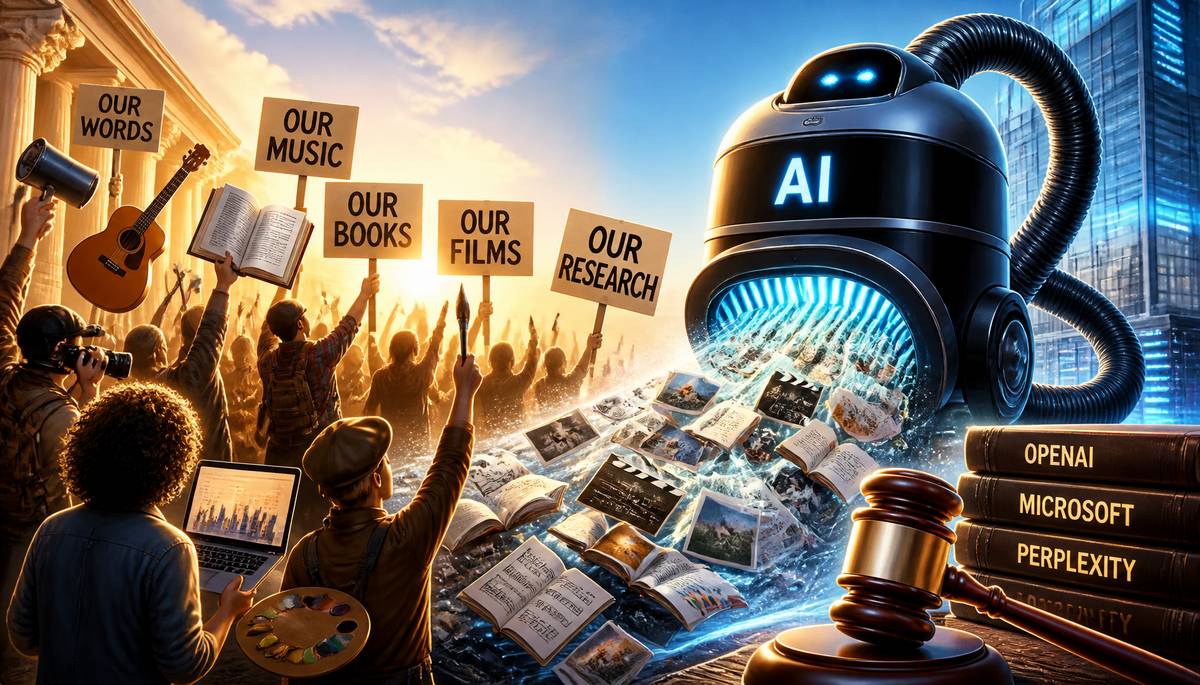 The machines showed up promising magic, and now the people who actually make the words, music, books, films and research are being told to feel honored that the vacuum cleaner noticed them.
At the World News Media Congress in France on Monday, New York Times publisher A.G. Sulzberger argued that AI companies are building products by ingesting journalism and other creative work without permission, then using it again and again to answer users directly. The result, he warned, is a system that can drain traffic and ad revenue from the outlets that paid to produce the original reporting.
The Times has spent $20 million over the past two-and-a-half years fighting OpenAI, Microsoft and Perplexity in court over that use of its reporting. Sulzberger said he supports AI tools when companies pay for content, pointing to the Times’ licensing deal with Amazon last year.
The dispute reaches far beyond news. Sulzberger said the same hunger for data now sweeps through books, music, film and academic research, threatening a global creative workforce of more than 50 million people tied to about $12 trillion in annual economic value.
Some media companies are cutting licensing deals while suing where they must. News Corp, parent of Dow Jones and the New York Post, has agreements with OpenAI and Meta, yet Dow Jones and the Post have been suing Perplexity since 2024. CNN joined that legal pile last month. Posted on 5 June 2026
Google’s Dreambeans Wants to Brew Your Data Into a Daily Cartoon Life
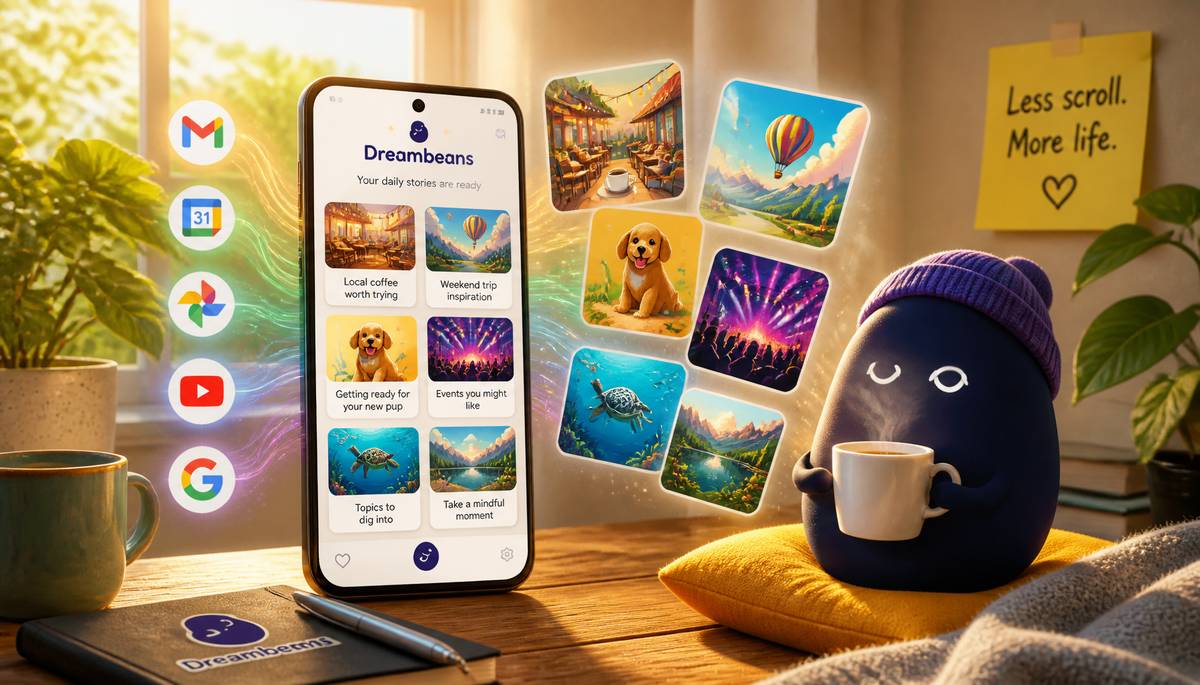 Google Labs has released Dreambeans, a new Android and iOS app that turns the sprawl of your Google life into AI-drawn daily story cards. Yes, the name sounds like a jazz cereal from an alternate timeline, but the product is real.
The app pulls, with permission, from Gmail, Calendar, Photos, YouTube, and Search History using Google’s Personal Intelligence system. From that stew, it assembles a limited menu of 10 to 14 illustrated prompts a day: nearby places to try, topics to dig into, events worth noticing, trip ideas, and small lifestyle nudges. If your calendar says a new dog is arriving, Dreambeans might prepare you for puppy reality. If your habits suggest a local coffee spot, it may surface that instead. Some cards are simply web articles matched to your interests.
The design goal is notable: less infinite feed, more finite spark. Google is clearly aiming at people tired of compulsive scrolling, giving them a handful of suggestions and then, ideally, pushing them back into actual life.
Privacy controls are built around user choice. Only the user can access their stories, connected services can be selected individually, and data can be deleted.
As for the name: Dreambeans works overnight while you sleep, then delivers a morning dose of concentrated inspiration, like algorithmic espresso.
It’s currently limited to eligible U.S. Google AI Ultra subscribers, with a waitlist for personal Google accounts.
Posted on 4 June 2026
Scorsese’s AI Bet Signals a New Hollywood Compromise
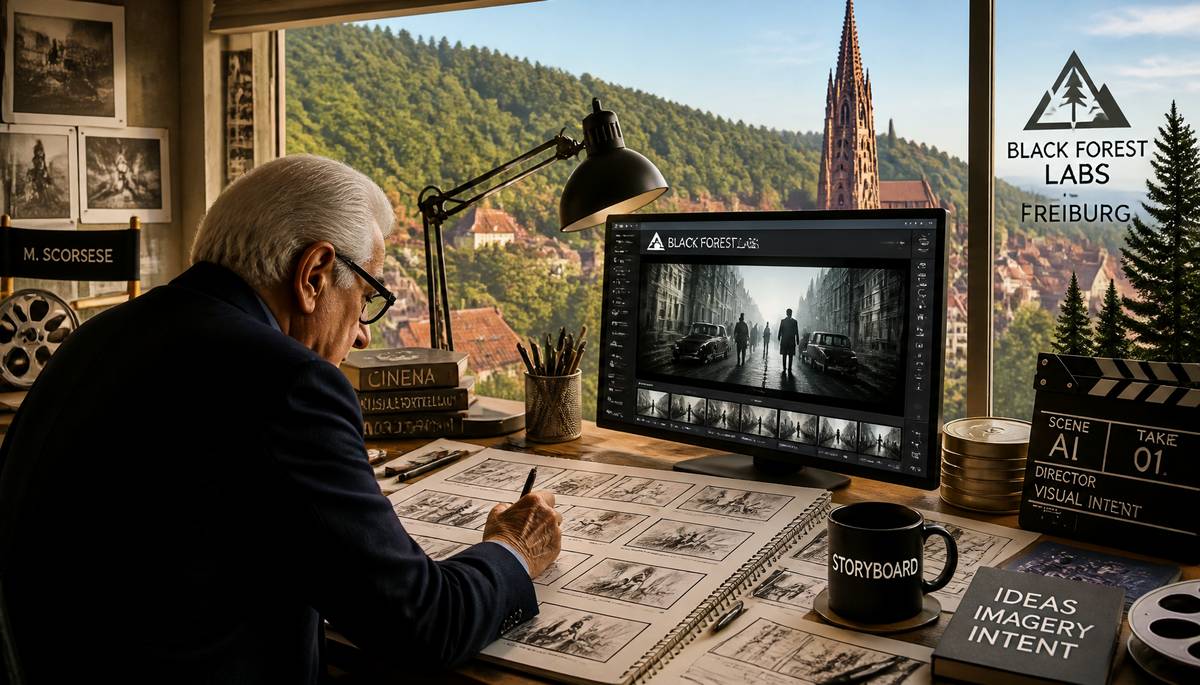 Martin Scorsese, an unlikely entrant in the current AI scramble, has joined AI image startup Black Forest Labs as a partner and adviser. His role is narrow but telling: he is using the system for storyboards, not finished film imagery.
Scorsese, who has spent 70 years drawing his own boards, says the tool lets him convey visual intent to cinematographers and production designers with greater speed and precision. That practical use matters. It suggests a veteran filmmaker is treating AI less as a replacement for craft than as an accelerant for preproduction.
Black Forest Labs is a 70-person company based in Freiburg, Germany, near the Black Forest itself rather than in Silicon Valley. Even so, its image technology is already embedded in products from Adobe, Canva, Microsoft, and Meta. Investors recently valued the company at $3.25 billion. Among them is BroadLight Capital, co-founded by Scorsese’s talent manager, Rick Yorn.
The startup was built by the team behind Stable Diffusion. It also reportedly chose not to deepen ties with Elon Musk’s xAI after an earlier collaboration on Grok’s image generator ended over concerns about content safeguards.
For entertainment workers wary of AI, Scorsese’s move may sharpen unease. Yet it also marks something broader: Hollywood’s early hard line against AI is giving way to selective adoption, beginning where speed and planning are hardest to resist.
Posted on 3 June 2026
Ben Bowen Maps the Machinery Behind a Happy Ending
 At Virginia Military Institute on April 10, 2026, Scott Shipp Hall became a little lantern for the strange mechanics of storytelling as Ben Bowen ’26, an English major, presented Writing Happy Endings: Practice and Theory.
Rather than building a conventional literary argument, Bowen shaped the honors presentation as a piece of literature in itself, using it to explain how his own fiction is made. Creative writing, he found, was far harsher than loving books had led him to expect; drafting gave way to relentless revision, and that struggle pushed him to ask what keeps readers inside a story.
His answer took form through two admired writers. From Edgar Allen Poe, Bowen drew the use of emotional intensity, especially melancholy, to seize attention. From John Gardner, who argued that fiction is forged through rewriting, Bowen took the idea that literature should carry moral purpose, remain interesting, and endure in the mind.
Those principles appear in Bowen’s short story Starbs Run and his novella Wild Turkey. In both, he uses emotionally charged scenes to avoid false sweetness, create flawed and believable characters, and portray trauma in a way that asks readers what they themselves might do. He also threads in comedy, side stories, and movement to sustain interest.
Wild Turkey remains unfinished, but Bowen expects hope and romance by the end. Advised by Col. Polly Atwell, he concentrates in writing and rhetoric, philosophy, and literary studies. The son of Floyd and Lisa Bowen of Forty Fort, Pennsylvania, and a graduate of Wyoming Valley West High School, he plans to commission into the Marine Corps after graduation.
Posted on 2 June 2026
The Multiplex Bows to the YouTube School of Horror
 What age once reserved for apprentices and mountebanks has now produced profitable masters of the multiplex. This weekend, the two leading pictures in America were horror films directed by men first trained before the tribunal of YouTube.
At the summit stands Backrooms, Kane Parsons’s expansion of his online found-footage labyrinth, itself descended from a 4chan conceit about an office realm hostile to geometry. Parsons, only 20, is steering the film toward about $81 million domestically in its opening frame, the largest debut A24 has ever enjoyed; its former best was Civil War with $25.7 million.
Close behind in rank, though stranger in behavior, is Obsession. Curry Barker’s film, about a romantic wish curdling into nightmare, is expected to earn $26.4 million this weekend. More remarkable than the sum is its growth: it made more in its second weekend than in its first, and its third is projected to rise another 10 percent. Such behavior is nearly unknown outside Christmas corridors. Most wide releases drop 50 to 70 percent in weekend two. Last year’s Sinners was hailed for falling under 5 percent. According to the Hollywood Reporter, Obsession is the first film since 1982 to grow in both its second and third weekends.
The pattern was foreshadowed by Iron Lung, Mark Fischbach’s video-game adaptation, which made nearly $41 million domestically. Barker has already finished another film and will next direct a new Texas Chainsaw Massacre. Even Star Wars, in the form of The Mandalorian and Grogu, trails at $24 million.
Posted on 1 June 2026
creativelistings.org (c)2009 - 2026