Why Great Interior Design Often Starts by Deciding What Not to Build
 The most expensive feature in a room is often the one nobody needed.
Interior design has a habit of attracting extras. Extra shelving, extra lighting, extra panelling, extra “statement” objects standing around like they are waiting to be interviewed. Yet many of the most successful interiors begin with a quieter decision: what can be left out?Restraint Is Not Laziness Choosing not to build something is not the same as running out of ideas. It is often the point where the better idea finally appears. A room does not become elegant because every wall has been given a job, every corner has been assigned a feature, and every surface has been decorated until it develops stage fright.
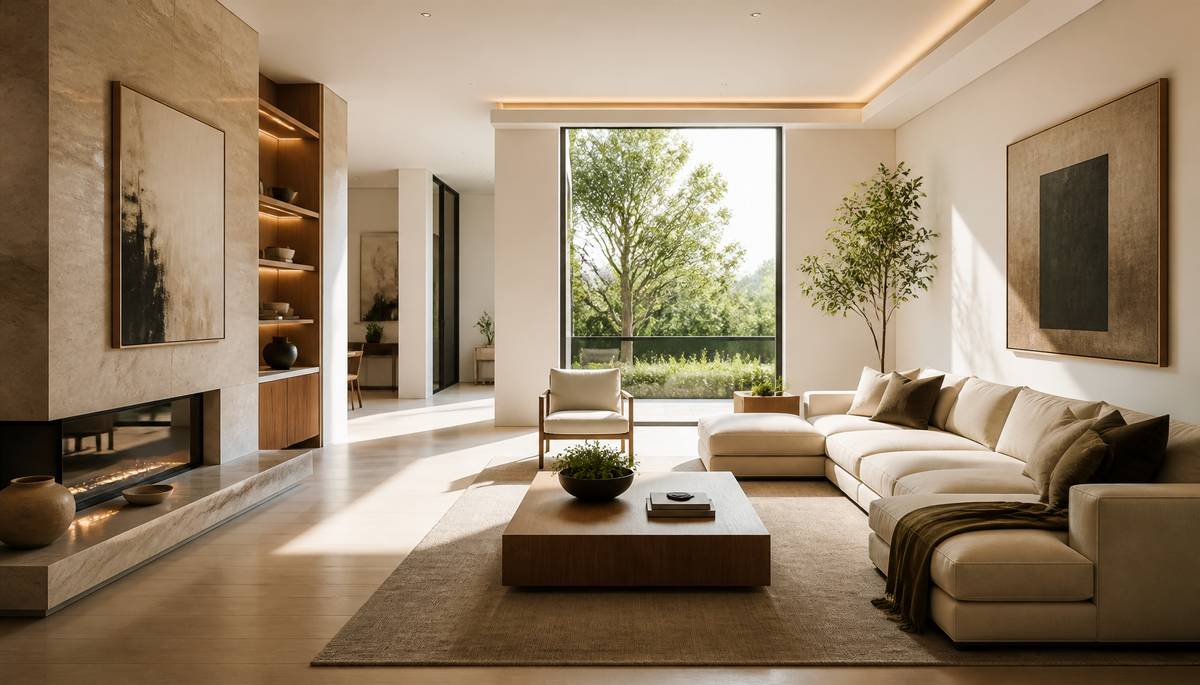
Restraint gives the eye somewhere to rest. It allows strong materials, good proportions, and natural light to do their work without being shouted over by three competing finishes and a decorative niche that looks suspiciously like a tiny bus stop for ornaments.
A simplified interior can feel more expensive than a crowded one because it suggests confidence. It says the room does not need to perform cartwheels to be noticed.Negative Space Does Positive Work Negative space is not empty space. It is breathing room. It gives furniture shape, lets movement feel natural, and prevents a home from becoming an obstacle course with cushions.
A clear wall can make artwork stronger. A plain floor area can make a beautiful rug matter more. A calm corner can make a whole room feel larger, even when no walls have moved and no one has bribed the building inspector.
This matters especially in smaller interiors. The instinct is often to add clever storage, folding features, display ledges, and multifunctional furniture until the room is technically brilliant but emotionally exhausting. Sometimes the best improvement is removing one awkward cabinet, not inventing a cabinet that rotates, sings, and stores winter coats.Layouts Improve When They Stop Trying So Hard A good layout starts with movement. Where do people walk? Where do they pause? Where does clutter naturally gather? Where does someone always place a bag, despite the existence of several very smug storage solutions?
When unnecessary features are removed, circulation improves. Furniture can be positioned for actual living rather than photographic evidence. Rooms become easier to clean, easier to use, and harder to ruin with one badly placed side table.
Every Addition Carries a Cost
Every new built-in feature, decorative partition, bespoke cabinet, or architectural flourish asks for something in return. It demands money, installation time, maintenance, and eventually repairs. Even seemingly simple additions can complicate future renovations, making access to wiring, plumbing, or structural elements more difficult than necessary.
Designing with restraint keeps those future decisions open. A flexible room can evolve with changing needs without requiring major alterations every few years. Rather than locking a space into today's trends, a simpler layout provides a foundation that can accommodate tomorrow's furniture, technology, or family requirements with far less disruption.
There is also a practical benefit that often goes unnoticed. Fewer permanent features usually mean fewer surfaces collecting dust. Dust possesses an astonishing talent for discovering decorative ledges that nobody remembered installing, and it never seems to take a holiday.Timeless Rooms Rarely Chase Every Trend
Interior fashions move remarkably quickly. One year every room needs fluted panels. The next year curved everything becomes essential. Before long, another wave arrives, bringing colours, textures, and materials that promise to redefine modern living for approximately eleven months.
A restrained interior ages more gracefully because it relies on fundamentals rather than novelty. Well-proportioned spaces, quality materials, thoughtful lighting, and carefully selected furnishings retain their appeal long after the latest design craze has quietly disappeared from magazine covers.
That does not mean a home should feel clinical or devoid of personality. Character comes from considered choices, not sheer quantity. A single distinctive piece of furniture often creates more impact than half a dozen decorative items competing for attention.Questions Worth Asking Before Building Anything
Before approving another feature, it helps to pause and ask whether it genuinely improves the room or simply fills available space. - Will this feature make everyday life easier?
- Does it solve a genuine problem rather than an imagined one?
- Could the room function just as well without it?
- Will it still feel appropriate in ten years?
- Does it improve the overall balance of the space?
If several answers point towards "probably not," leaving that feature on the drawing board may prove to be the wisest design decision of the entire project.Leaving Room for Great Design
Perhaps the greatest compliment an interior can receive is that it simply feels right. Visitors may struggle to explain why they enjoy spending time there, yet everything seems comfortable, balanced, and effortless. That feeling rarely comes from adding one final decorative flourish. More often, it comes from knowing when enough is enough.
Great interior design is not measured by how many ideas fit into a room but by how clearly the best ideas are allowed to shine. Sometimes the smartest blueprint is the one with a few thoughtful eraser marks. After all, even the finest rooms appreciate having a little space to stretch their legs.
|
|